



Traduce tu sitio web al alemán: diseño, palabras compuestas y Sie/du
Traduce tu sitio web al alemán con una interfaz que admita la expansión del texto, el uso de Sie o du, las diferencias entre de-DE y las variantes de Austria y Suiza, palabras clave compuestas, URL rastreables y una lista de comprobación para el lanzamiento.
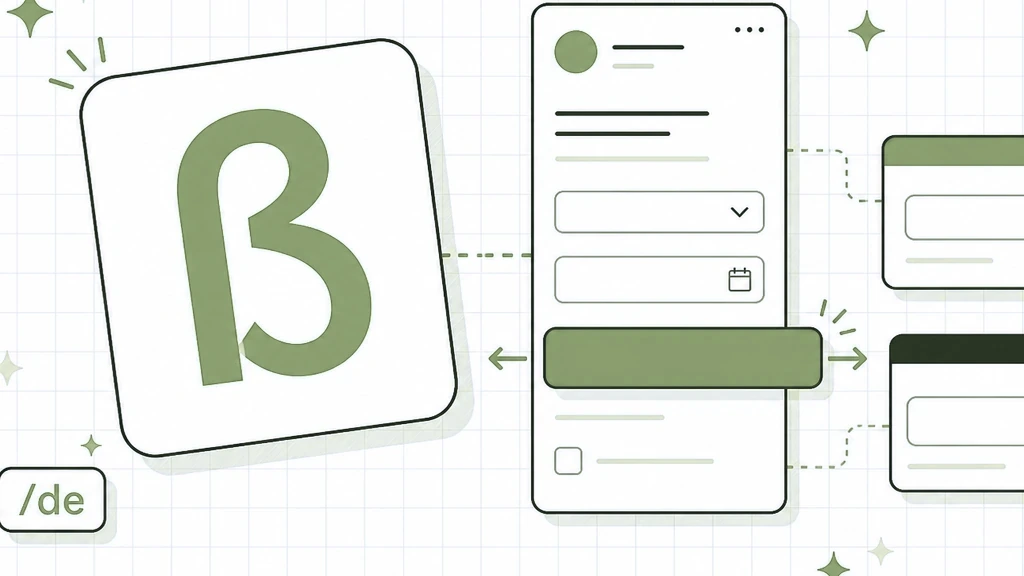
When you translate a website to German, missing umlauts are rarely the first failure. German buyers notice overflowed buttons, chopped compound nouns, and a homepage that says du while checkout says Sie. The work that earns trust is layout engineering, a formality policy, and a crawlable German URL whose body is actually German.
What does it take to translate a website to German beyond swapping strings?
Beyond CMS fields and a bilingual glossary, you need room for longer UI strings, a truncation strategy that does not slice compounds in half, a locked Sie vs du policy, and a real German URL that search engines can crawl. The sections below walk through those decisions in launch order.
Preguntas que responde esta guía
- What does it take to translate a website to German beyond swapping strings?
- Which German locale or regional variants should you choose?
- What script, typography, and layout issues are unique to German?
- How should URLs, hreflang, and indexing work for a German site version?
- What onboarding and checkout nuances matter in German?
- Should you use AI translation, MTPE, or human review for German?
- What SEO mistakes specifically hurt German pages?
- How do you launch and measure a German website version?
Quick answer: translate your website to German the right way
A durable German launch looks like this:
- Start with
de-DE, then decide whether Austria (de-AT) or Switzerland (de-CH) need their own pass. - Lock Sie vs du in the glossary before anyone translates a file.
- Publish German on its own crawlable URL—not a cookie-only switch.
- Prototype primary screens with real German copy so navigation, cookies, and tables can grow.
- Research German compound queries instead of translating English head terms word by word.
- Añade etiquetas hreflang recíprocas, etiquetas canónicas coherentes y mapas del sitio antes de ampliar el proyecto.
CSA Research’s survey of 8,709 consumers in 29 countries found 76% prefer buying with information in their own language and 40% will never buy from websites in other languages. That still holds when some German speakers also read English: checkout, invoices, and privacy pages are where language-only English quietly loses the sale. Google’s helpful-content guidance favors people-first pages; a German nav around English body copy is a weak locale for users and search. For market-versus-language strategy, read how international SEO differs from multilingual SEO.
Choose the right German locale
Most teams begin with de-DE. Add de-AT or de-CH when pricing, legal copy, payment methods, or campaign vocabulary truly differ—not because someone asked for “all German-speaking countries” on a spreadsheet.
Switzerland is the variant that most often deserves its own review. Swiss Standard German does not use ß (it writes ss), and everyday vocabulary can diverge (parkieren vs parken, Trottoir vs Bürgersteig). Austria has its own lexical habits (Jänner for January in many local contexts). A single de-DE file can still be the right first release if you are not selling locally in those markets yet—just do not pretend one glossary covers all three without a native pass.
Decide Sie vs du before translators open a file. Sie is the safe default for B2B, fintech, healthcare, and most checkout experiences. du can work for youthful consumer products when marketing, product, and support agree. Mixing them across homepage, emails, and in-app strings reads as unfinished. Put the choice in the glossary so every vendor and model uses the same posture.
Also decide how you will handle Anrede (Herr/Frau and any additional options you support) in forms. German checkout templates often expose formality that English forms hide behind a first-name field.
German script, typography, and layout nuances
German uses the Latin script, so you will not change text direction. You will fight expansion and unbroken compounds.
German UI strings frequently run 20–35% longer than English. Navigation labels, cookie banners, table headers, and primary buttons are the usual overflow suspects. Compound nouns arrive as single tokens (Datenschutzeinstellungen, Zahlungsbedingungen). Naive text-overflow: ellipsis on a 12-character budget chops meaning in half and can leave a letter that looks like a different word.
Reglas de diseño para evitar capturas de errores durante la semana del lanzamiento:
- Prototype key screens with real German copy before you announce the locale.
- Prioriza los contenedores flexibles frente a los límites de caracteres pensados para el inglés.
- Permite que los botones crezcan o que su texto ocupe varias líneas; no reduzcas el tamaño de la letra para mantener en una sola línea una llamada a la acción diseñada en inglés.
- Use fonts with full coverage for ä ö ü ß in UI, email, and PDFs.
- Define a hyphenation policy for long compounds (CSS
hyphensplus a reviewer who knows where a split is readable). - Keep a consistent ß/ss policy:
de-DE/de-ATvs Swissss.
Dates and numbers are part of the layout contract. German-speaking users expect 19.08.2026, decimal commas (1.234,56 €), and often a space before the currency symbol depending on house style. Sorting is not “Unicode code points”: umlauts and ß have DIN vs phone-book conventions. If your directory or data table sorts Über next to Z, fix collation before you call the locale done.
Cadence matters. English CTAs are often abrupt. German marketing can be more complete without becoming bureaucratic—while payment and error copy stay plain. Train reviewers to protect payment clarity while giving homepage enough room to sound like German, not translated English.
URL rastreables, hreflang e indexación
Google recommends different crawlable URLs for each language or region version rather than cookies or browser language alone. Google determines page language primarily from visible content—so a translated nav around English body copy is a weak German version. Give German its own folder, subdomain, or domain pattern (/de/, de., or a ccTLD) and keep that pattern consistent across templates, analytics, and internal links.
Hreflang annotations must be reciprocal across the alternate set you declare. If you ship both de-DE and de-CH, each URL needs return links; do not declare a variant you cannot crawl. Each locale URL should carry a clear canonical that prefers the same-language preferred URL when duplicates exist. Do not canonical a German page to its English equivalent.
Bing Webmaster Guidelines emphasize crawlable, useful content and clear site structure across markets. Build once for shared foundations, then monitor Google Search Console and Bing Webmaster Tools where you operate both. Google advises against automatically redirecting users based on assumed language or location; offer a visible selector that links to the German URL instead. IP-guessing “Germany → /de” traps travelers, VPNs, and crawlers.
Incorporación de usuarios, confianza y proceso de compra en el idioma de destino
German trust pages do more work than a translated feature list. Sites that sell to Germany typically need Impressum and privacy copy that read as real legal pages, not leftover English templates. That is not a ranking tactic; it is what German users look for when they decide whether a checkout is legitimate. Treat those pages as first-class localization, and have counsel or a qualified local reviewer own the legal wording—do not improvise them in a translation memory.
Practical German conversion checks:
- Homepage, ads, and product UI use the same Sie/du policy.
- Forms expose Anrede only if you can store and reuse it correctly in email.
- Los textos de cookies y consentimiento se revisan en el propio banner: suelen ser largos y presentar saltos de línea poco adecuados.
- Pricing, invoices, and VAT language match the market you claim to serve (
de-DEvsde-CH). - Las respuestas predefinidas de atención al cliente y los correos transaccionales mantienen el grado de formalidad del producto.
- Error messages name the fix (“card declined—try another card”) rather than a polite empty apology.
- Comparison tables and feature matrices are human-reviewed; compounds plus column headers are layout-hostile.
No necesitas tener todas las entradas del blog desde el primer día. Sí necesitas la página de inicio y la explicación del producto, la autenticación, los precios, el proceso de compra y la facturación, la información básica sobre privacidad, los puntos de acceso al soporte y las páginas legales que espera tu mercado. Las entradas del archivo pueden incorporarse después mediante MTPE.
The myth that “Germans all speak English, skip localization” is only half true. Some will browse docs in English. Enough will not complete checkout, billing, or support in English that you still leave money on the table—especially outside tech-early-adopter niches.
IA, MTPE y revisión humana para este idioma
Elige el flujo de trabajo en función del riesgo, no de la marca de la herramienta:
- Raw machine translation: fine for internal drafts only. German compounds and formality drift are easy for models to look “done” while sounding wrong.
- MTPE (machine translation + post-editing): a solid default for many product and support pages when glossary, Sie/du, and ß/ss gates exist.
- Traducción humana / edición de marca: página de inicio, precios, campañas, cookies y consentimiento, y cualquier página relacionada con cuestiones legales.
A practical review loop for German:
- MTPE draft against the glossary (Sie/du and ß/ss locked).
- Revisión editorial de marca de la página de inicio, los precios y las principales páginas de destino.
- Product linguist pass on errors, billing, and dynamic UI—especially compounds in buttons and tables.
- Staging QA in German at mobile widths—not only a side-by-side string review.
- Native pass for
de-AT/de-CHonly when you actually serve those markets.
People-first helpful content expectations apply in every language. Low-quality machine-only German pages can look complete in a CMS while still failing users and search quality bars.
German-specific SEO pitfalls
German searchers often use precise compound queries. Translating English head terms word-by-word (translate website → a clumsy calque) misses how people actually search (Website übersetzen, Website-Übersetzung, product-category compounds). Do German-language keyword research, then write titles and H1s that sound like German results pages—not like English metadata with nouns swapped.
Localize titles, meta descriptions, and headings per German URL. Do not reuse one English metadata set across locales.
Mistakes that specifically hurt German pages:
- Boilerplate-only translation — chrome German, body still English.
- Sie/du drift across templates, emails, and ads.
- Ellipsis on compounds that produces nonsense labels in nav and tables.
- Cookie-only language switches that hide the German URL from crawlers.
- Broken hreflang (missing return links) or English canonicals on German URLs.
- Redirecciones geográficas automáticas que dejan atrapados a usuarios y bots.
- One
defile for DE/AT/CH with Swiss ß and Austrian vocabulary mixed at random. - Versiones de idioma con contenido escaso y solo traducción automática que no cumplen los criterios de contenido útil.
Fix layout, formality, and architecture before you scale to more Germanic languages. Tooling should enforce the process—not invent ranking promises.
Lista de comprobación para el lanzamiento
Use this checklist when you are ready to ship German:
Cómo encaja GlotEO
German is a strong fit for translation memory: enterprise UI phrases and legal-adjacent labels recur. Glossary and memory in the website localization platform keep Sie/du, ß/ss, and feature names stable while layout-tested copy ships. Pair that with multilingual SEO tooling so German URLs, hreflang, and metadata stay reviewable as you expand. Compare GlotEO pricing and plans when you scope the first German release, or start from a broader website translation workflow if you are still choosing languages.
Referencias
- Supports crawlable, useful multilingual site structure guidance cited in this article (Bing Webmaster Guidelines)
- Supports language preference and purchase intent findings cited in this article (Can't Read, Won't Buy – B2C: Consumers Prefer their Own Language)
- Respalda las recomendaciones sobre URL canónicas en el mismo idioma citadas en este artículo (Cómo especificar una URL canónica con rel=canonical y otros métodos)
- Supports people-first helpful content expectations cited in this article (Creating helpful, reliable, people-first content)
- Respalda las recomendaciones sobre enlaces hreflang recíprocos citadas en este artículo (Indicar a Google las versiones localizadas de una página)
- Supports crawlable language version and language detection guidance cited in this article (Managing multi-regional and multilingual sites)