



Translating a WordPress Website: Crawlable Locales and SEO
Translate WordPress into crawlable language URLs with sound plugin or multisite choices, hreflang, sitemaps, and an editorial workflow that keeps locales maintainable.
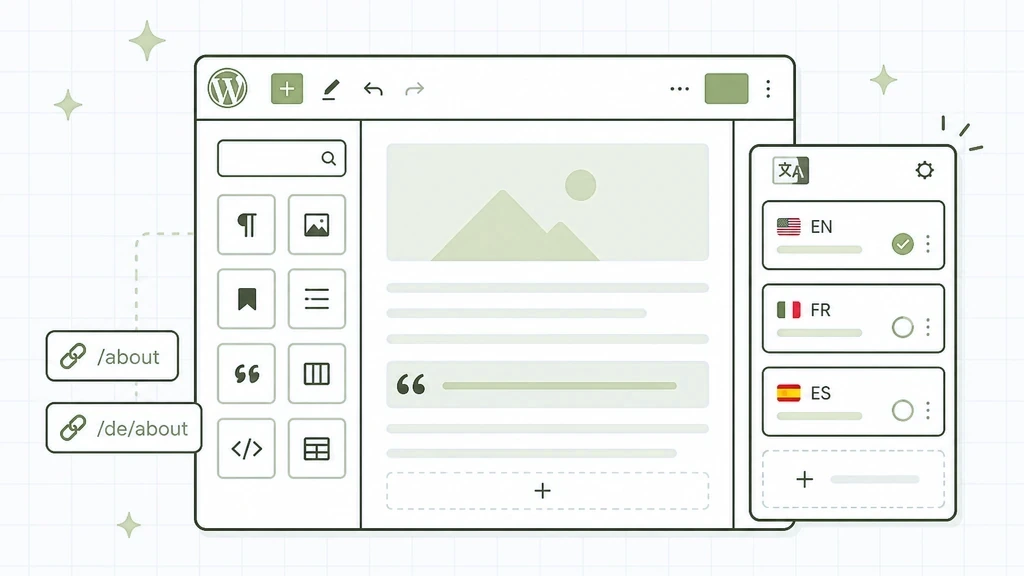
Translating a WordPress website means more than installing a multilingual plugin. Google expects each language version at its own crawlable URL, with navigation and body copy predominantly in one language, plus reciprocal hreflang when you publish alternates.
Quick answer: distinct WordPress URLs per language
WordPress sites scale through plugins, multisite networks, or external proxies—but SEO foundations stay constant: one crawlable URL per language. Google recommends different URLs for each language or region instead of cookies or browser language alone. Plugins that only swap text on /pricing via JavaScript or cookies leave search engines with a single indexed URL.
Start by rejecting single-URL language toggles. Then pick folder, subdomain, or domain patterns your team can maintain. Read international SEO versus multilingual SEO if you are deciding market scope before URL design.
WordPress multilingual architecture options
Three common architectures:
- Multilingual plugin on one site — adds locale prefixes or parallel slugs (
/en/about,/fr/a-propos). Lowest friction for small marketing sites. - WordPress multisite — separate sites per language under a network. Strong isolation; more ops overhead.
- Reverse proxy or headless layer — WordPress remains source; edge or static layer serves locale URLs. Good for performance-heavy stacks.
All three can satisfy Google when each locale has a distinct public URL and complete HTML. None justify cookie-only switches on one address.
URL patterns: folders, subdomains and domains
Folders (/de/, /es/) keep one certificate and one Search Console property (with locale reporting via paths). Subdomains (de.example.com) suit regional teams or CDN rules. ccTLDs signal country targeting when you operate truly local properties.
Google determines page language from visible content. Pick a pattern, document it, and keep permalinks stable after launch. Changing slug schemes breaks hreflang clusters and inbound links.
Avoid automatic redirects based on guessed language or location. Provide a visible language switcher linking to the alternate URL instead.
Plugin vs multisite vs proxy tradeoffs
Plugins (WPML, Polylang, TranslatePress, and others) differ in editor UX and URL models—evaluate crawlability, not marketing claims. Confirm the plugin creates separate URLs per language, not AJAX swaps on one permalink.
Multisite gives each locale its own theme options, menus, and users. Crawlability is natural because sites have distinct home URLs. Cost: network administration and plugin licensing per site.
Proxy approaches can serve cached locale HTML fast but must still emit correct canonicals and hreflang at the edge. WordPress language versions need distinct public URLs; cookie/JS-only swaps conflict with Google guidance.
When comparing tools, ask: Does each translation get a unique URL? Are hreflang and sitemaps automated or exportable? Can editors review in context?
Hreflang, canonicals and XML sitemaps
Implement hreflang in WordPress via SEO plugins, dedicated hreflang extensions, or sitemap xhtml:link entries. Hreflang must be reciprocal: if /en/about references /fr/a-propos, the French page must reference English and itself with matching codes.
Set canonical tags per language to the preferred URL for that locale. Do not point French pages to English URLs as canonical.
WordPress XML sitemaps should list each language URL and stay aligned with hreflang and canonical strategy. Many SEO plugins generate locale sitemaps; verify they include all translated custom post types, not only posts and pages. See our multilingual SEO platform overview for audit patterns.
Menus, widgets, media and theme strings
Themes often hard-code English in footers, buttons, and widget titles. Export theme strings through your plugin’s string translation UI or child theme overrides. Menus should be language-specific: French navigation should link to French URLs, not English slugs with translated labels.
Media needs alt text and captions per locale. Shared images are fine; metadata must match the page language. Widgets (search, newsletter, related posts) should pull localized content queries.
Keeping each URL predominantly in one language includes these chrome elements—not only post bodies.
Editorial workflow on WordPress
Maintainability breaks when translators work only inside post editors without glossary or TM. Layer:
- Glossary for product and legal terms
- Translation memory to reuse approved phrases
- Review states before publish
- Change detection when English updates
Google helpful-content guidance prioritizes people-first pages; thin or boilerplate-only translations fail that bar. Schedule periodic audits of top landing pages in each locale.
قائمة التحقق من التنفيذ
Bing Webmaster Guidelines also emphasize crawlable structure and useful content for indexing across markets.
أخطاء شائعة
Single-URL AJAX translation — one indexed URL, invisible alternates.
Hreflang pointing to 404s or redirects — breaks reciprocity.
Mixed-language menus — French labels linking to English slugs.
Untranslated theme footer — dilutes language signals.
English canonical on translated posts — wrong consolidation.
Auto-redirect by country — blocks crawlers and users.
Machine translation without review on cornerstone content — thin locale pages.
أسس البحث التقليدي ومحركات الإجابة
Shared foundations for WordPress multilingual plugins and public locale URLs still matter across Google, Bing, and answer engines: crawlable language versions, clear entities, evidence-backed claims, structured data where truthful, and real localization—not English-only shells. Treat the guides below as platform-specific lenses on the same multilingual delivery bar.
دليل المنصة: Google Search
في بحث Google، يعتمد اكتشاف المحتوى على عناوين URL قابلة للزحف للنسخ اللغوية والإقليمية، مع محتوى HTML باللغة المناسبة، وعناوين وعناوين فرعية دقيقة، وروابط hreflang متبادلة عند وجود نسخ بديلة. وتشمل الأسس التقنية محتوى قابلًا للفهرسة، لا تبديلًا يعتمد على ملفات تعريف الارتباط وحدها، وبيانات وصفية موطّنة، وخرائط مواقع، وضبطًا دقيقًا للروابط الأساسية (canonical). وتعني جودة المحتوى تقديم محتوى رئيسي يضع احتياجات الناس أولًا في كل لغة؛ أما الموثوقية فتنبع من وضوح هوية المؤسسة والمصادر المؤيدة، لا من التسويق لأدوات الترجمة. وما يعنيه ذلك للمحتوى متعدد اللغات: يجب أن يكون كل عنوان URL مخصص لسوق أو لغة قائمًا بذاته. قِس النتائج عبر تقارير التغطية وأداة فحص عنوان URL في Search Console لكل نسخة لغوية أو إقليمية. المعلوم وغير المؤكد: توثّق Google سلوك المحتوى متعدد اللغات وhreflang، لكنها لا تضمن ترتيبًا معينًا نتيجة استخدام أي نظام لإدارة المحتوى أو سير عمل للتحرير اللاحق للترجمة الآلية (MTPE).
دليل المنصة: Bing
يكتشف Bing الصفحات متعددة اللغات ذات البنية الواضحة والقابلة للزحف ويفهرسها، بما يشبه متطلبات Google لوضوح عناوين URL والمحتوى. وتشمل الأسس التقنية عناوين URL للنسخ اللغوية والإقليمية يمكن جلب محتواها، ومحتوى مفيدًا، ومتابعةً عبر Bing Webmaster Tools. أعطِ الأولوية لتوطين العناوين والادعاءات والأسئلة الشائعة بدلًا من الاقتصار على ترجمة عناصر الواجهة. وتظل مؤشرات الموثوقية معتمدة على مصادر جديرة بالثقة وكيانات متسقة. وما يعنيه ذلك للمحتوى متعدد اللغات: لا تُخفِ اللغات خلف أدوات تبديل تعمل من جانب العميل فقط. قِس الفهرسة وإحصاءات الزحف في Bing Webmaster Tools. المعلوم وغير المؤكد: تؤكد إرشادات Bing أهمية المحتوى المفيد القابل للزحف؛ فلا تختلق عوامل ترتيب خاصة بـBing لأدوات الترجمة.
دليل المنصة: ChatGPT
قد يستشهد ChatGPT بالصفحات المتاحة للعامة أو يلخّصها عندما تكون نسخها اللغوية واضحة ومهيأة لتقديم إجابات. لا يقوم اكتشاف المحتوى هنا على ترتيب نتائج زحف تقليدي؛ بل يتمثل الظهور في اختيار الصفحة مصدرًا أو الإشارة إليها في الإجابات. وتظل الأسس التقنية تبدأ بعناوين URL تتيح الوصول إلى محتوى HTML، لا بطبقات أدوات مصغّرة تخفي النصوص. ومن خصائص المحتوى المفيدة: الإجابات المباشرة، والأسئلة الشائعة، والمصطلحات الثابتة المستمدة من المسارد. وتنبع الموثوقية من الأدلة واتساق الكيانات عبر النسخ اللغوية والإقليمية. وما يعنيه ذلك للمحتوى متعدد اللغات: ينبغي أن تكون كل صفحة موطّنة مفهومة بذاتها. القياس ليس دقيقًا تمامًا؛ لذا تعامل مع فحوص الاستشهادات بوصفها فرضيات. المعلوم وغير المؤكد: لا يوجد ضمان موثّق بأن التحرير اللاحق للترجمة الآلية (MTPE) أو أي تكامل مع نظام إدارة محتوى سيؤدي إلى استشهادات في ChatGPT.
دليل المنصة: Gemini
تستفيد Gemini وتجارب الذكاء الاصطناعي ذات الصلة من Google من اتساق الكيانات، والبيانات المنظّمة الدقيقة، والصفحات الموطّنة القابلة للفهرسة. ويتمثل الظهور في الإشارة إلى المحتوى أو التعرّف عليه، لا في اختلاق عوامل ترتيب لـGemini. وتتقاطع الأسس التقنية مع متطلبات قابلية الزحف وجودة البيانات الوصفية في بحث Google. وينبغي أن يقدّم المحتوى ادعاءات وتعريفات واضحة بكل لغة. وتعتمد الموثوقية على اتساق معلومات المؤسسة وما يؤيدها من مصادر. وما يعنيه ذلك للمحتوى متعدد اللغات: ضبط أسماء المنتجات بالمسارد يقلل الالتباس بين النسخ اللغوية والإقليمية. قِس النتائج بالطرق التقليدية عبر Search Console، وافحص عينة من إجابات الذكاء الاصطناعي لتقييمها نوعيًا. المعلوم وغير المؤكد: سلوك Gemini ليس بديلًا عن إرشادات بحث Google الموثّقة بشأن hreflang والنسخ اللغوية.
دليل المنصة: Google AI Overviews
قد تتضمن Google AI Overviews روابط إلى صفحات داعمة؛ وتظل معايير الأهلية قائمة على محتوى قابل للفهرسة يضع احتياجات الناس أولًا. وهي ليست أداة لتبديل اللغة ولا تحل محل hreflang. وتبقى الأسس التقنية هي محتوى HTML قابل للزحف لكل نسخة لغوية أو إقليمية وبيانات منظّمة تعكس الواقع. وتشمل خصائص المحتوى إجابات موجزة وعناوين واضحة بكل لغة. وتعكس مؤشرات الموثوقية متطلبات المحتوى المفيد. وما يعنيه ذلك للمحتوى متعدد اللغات: إدراج أي صفحة مترجمة في هذه الملخصات غير مضمون. قِس النتائج عبر تقارير البحث التوليدي في Search Console حيثما تتوفر، وافصلها عن مقاييس الفهرسة التقليدية. المعلوم وغير المؤكد: لا يمكن لأي سير عمل للترجمة أن يَعِد بالظهور في AI Overviews.
دور GlotEO
WordPress teams often outgrow ad hoc plugin workflows when glossary control and SEO validation matter. GlotEO offers a WordPress translation integration so marketers manage locales while WordPress keeps crawlable URLs. Review GlotEO pricing and plans and the website localization platform when comparing rollout options.
المراجع
- يدعم الإرشادات الواردة في هذا المقال (إرشادات Bing لمشرفي المواقع)
- يدعم الإرشادات الواردة في هذا المقال (كيفية تحديد عنوان URL أساسي باستخدام rel=canonical وطرق أخرى)
- يدعم الإرشادات الواردة في هذا المقال (إنشاء محتوى مفيد وموثوق يضع المستخدمين في المقام الأول)
- يدعم الإرشادات الواردة في هذا المقال (إبلاغ Google بنسخ صفحتك المخصّصة للغات والمناطق المختلفة)
- يدعم الإرشادات الواردة في هذا المقال (إدارة المواقع المتعدّدة المناطق واللغات)
- يدعم الإرشادات المستشهد بها في هذه المقالة (تعرّف على خرائط المواقع)