



웹사이트 이탈리아어 번역: 브랜드 보이스와 Lei/tu 사용법
명확한 Lei/tu 사용 원칙, 문법적 성을 고려한 UI, 자연스러운 CTA, 크롤링 가능한 URL, 실무에 유용한 출시 체크리스트를 바탕으로 웹사이트를 이탈리아어로 번역하세요.
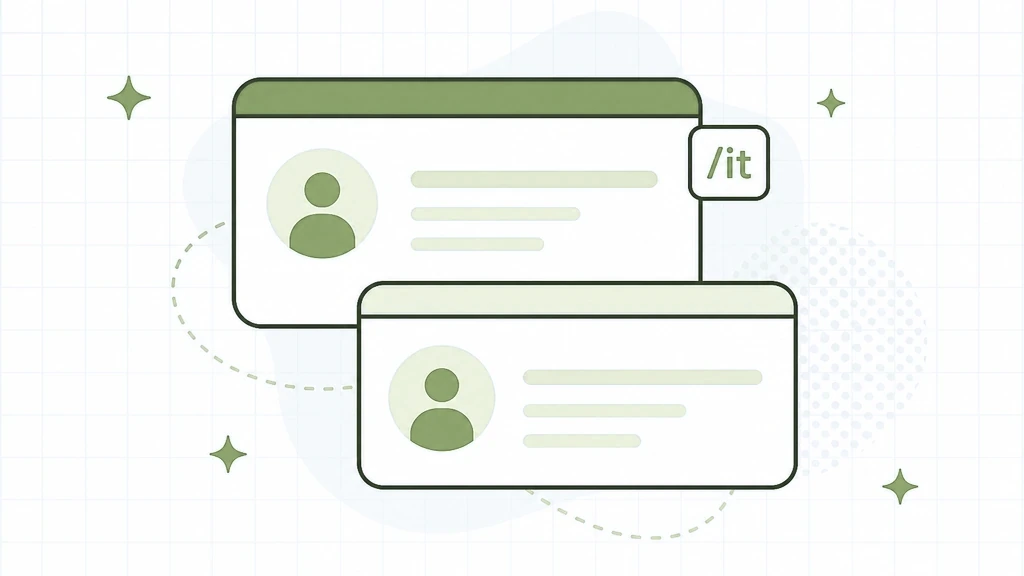
When you translate a website to Italian, string swaps are the easy part. Italian buyers notice when marketing sounds machine-translated, when Lei and tu collide in the same journey, and when checkout errors feel vague. The work that earns trust is voice, gender agreement, and a crawlable Italian URL that stands on its own.
What does it take to translate a website to Italian beyond swapping strings?
Beyond dictionaries and CMS fields, you need a formality policy (Lei vs tu), gender-aware UI templates, natural marketing cadence on conversion pages, and a real Italian URL that search engines can crawl. The sections below walk through those decisions in launch order.
이 가이드에서 다루는 질문
- What does it take to translate a website to Italian beyond swapping strings?
- Which Italian locale or regional variants should you choose?
- What script, typography, and layout issues are unique to Italian?
- How should URLs, hreflang, and indexing work for an Italian site version?
- What onboarding and checkout nuances matter in Italian?
- Should you use AI translation, MTPE, or human review for Italian?
- What SEO mistakes specifically hurt Italian pages?
- How do you launch and measure an Italian website version?
Quick answer: translate your website to Italian the right way
A durable Italian launch looks like this:
- Pick
it-IT(and optionallyit-CH) with an explicit Lei vs tu policy. - Publish Italian on its own crawlable URL—not a cookie-only switch.
- 내비게이션뿐 아니라 주요 콘텐츠, 메타데이터, 전환 관련 템플릿까지 현지화하세요.
- Enforce glossary terms, then review homepage warmth separately from checkout clarity.
- Add reciprocal hreflang, sane canonicals, and sitemaps before you scale.
CSA Research가 29개국 소비자 8,709명을 대상으로 실시한 설문조사에 따르면, 76%는 자신의 언어로 된 정보를 보고 구매하는 것을 선호하며 40%는 다른 언어로 된 웹사이트에서 절대 구매하지 않는다고 답했습니다. Google의 유용한 콘텐츠 가이드는 사람을 우선하는 페이지를 권장합니다. 상투적인 내용만 담은 빈약한 언어별 페이지는 사용자 경험과 검색 성과 모두에서 부진합니다. 시장 중심 전략과 언어 중심 전략의 차이를 더 폭넓게 이해하려면 국제 SEO와 다국어 SEO의 차이를 읽어보세요.
Choose the right Italian locale
Most teams begin with it-IT for Italy. Add it-CH only when Swiss Italian customers, pricing, or legal offers truly differ—then give that version a light native pass rather than assuming Italy copy travels unchanged.
Decide Lei vs tu before translators open a file. Lei remains the safe default for B2B, premium consumer, and regulated experiences. Tu can work for youthful products when marketing, product, and support agree. Inconsistency across homepage, emails, and in-app strings reads as amateur. Put the choice in the glossary so every vendor and model uses the same posture.
Also decide how you will handle gendered roles, statuses, and adjectives in dynamic UI. Italian agreement shows up in places English templates ignore—plan for it in the locale choice conversation, not after launch.
Italian script, typography, and layout nuances
Italian uses the Latin script, so you will not face script direction changes. You will face text expansion, longer CTAs, and punctuation habits that differ from English marketing. Plan flexible buttons and form labels; English “Get started” often becomes a more musical Italian line that needs room.
Typography tips that prevent polish problems:
- Prefer fonts with full Italian accent coverage (à, è, é, ì, ò, ù).
- Avoid cramped button widths that force awkward line breaks on mobile.
- Keep line length readable on product pages; Italian marketing can run longer than English without becoming flowery on transactional screens.
Cadence matters. English CTAs are often abrupt. Italian marketing frequently wants a slightly more rhythmic line on the homepage—while payment and error copy stay plain and unambiguous. Train reviewers to protect payment clarity while improving homepage rhythm.
크롤링 가능한 URL, hreflang, 색인 생성
Google recommends different crawlable URLs for each language or region version rather than cookies or browser language alone. Google determines page language primarily from visible content—so a translated nav around English body copy is a weak Italian version. Give Italian its own folder, subdomain, or domain pattern and keep it consistent across templates, analytics, and internal links.
Hreflang annotations must be reciprocal across the alternate set you declare. Each locale URL should carry a clear canonical that prefers the same-language preferred URL when duplicates exist. Do not canonical an Italian page to its English equivalent.
Bing Webmaster Guidelines emphasize crawlable, useful content and clear site structure across markets. Build once for shared foundations, then monitor Google Search Console and Bing Webmaster Tools where you operate both. Google advises against automatically redirecting users based on assumed language or location; offer a visible selector that links to the Italian URL instead.
대상 언어로 제공하는 온보딩, 신뢰 형성, 결제 경험
Italian homepage copy can carry more warmth than English. Onboarding and trust pages should sound like a brand speaking to people—not a spreadsheet of features. Checkout, invoices, and payment errors should stay unambiguous. Train reviewers with that split explicitly so they do not “beautify” payment failures into vague prose.
Practical Italian conversion checks:
- Account, role, and status labels agree in gender where the UI shows them.
- Legal and pricing language matches the market you claim to serve (
it-ITvsit-CH). - Support macros and transactional email use the same Lei/tu policy as the product.
- Error messages name the fix (“card declined—try another card”) rather than a poetic apology.
온보딩이 딱딱하게 느껴진다면 초기 이용 과정과 가격 안내 페이지의 어조부터 개선하세요. 결제 안내가 지나치게 완곡하다면 홈페이지를 다시 고치기 전에 거래 관련 문구를 먼저 명확하게 다듬으세요.
러시아어를 위한 AI, MTPE, 사람의 검토
도구의 브랜드가 아니라 위험도를 기준으로 작업 방식을 선택하세요.
- 후편집하지 않은 기계 번역: 내부 초안에만 사용하세요.
- MTPE(기계 번역 + 후편집): 용어집과 단계별 검토 절차가 갖춰져 있다면 많은 제품 및 고객 지원 페이지에 적합한 기본 방식입니다.
- 전문가 번역 / 브랜드 문구 편집: 홈페이지, 요금 안내, 브랜드 캠페인, 전환 성과가 특히 중요한 문구에 적용합니다.
A practical creative review loop for Italian:
- MTPE draft against the glossary (Lei/tu locked).
- 브랜드 에디터가 홈페이지, 요금 안내, 주요 랜딩 페이지를 검토합니다.
- Product linguist pass on errors, billing, and dynamic UI strings.
- Publish with staging QA in Italian—not only a side-by-side string review.
People-first helpful content expectations apply in every language. Low-quality machine-only Italian pages can look “done” in a CMS while still failing users and search quality bars.
Italian-specific SEO pitfalls
Anglicisms are common in Italian tech—but not universal. Validate category by category: a SaaS dashboard term may stay English while a consumer category page needs a natural Italian keyword. Localize titles, meta descriptions, and headings per Italian URL; do not reuse one English metadata set across locales.
Mistakes that specifically hurt Italian pages:
- Boilerplate-only translation — chrome Italian, body still English.
- Lei/tu drift across templates, emails, and ads.
- Gender-blind string templates that produce almost-Italian UI.
- Cookie-only language switches that hide the Italian URL from crawlers.
- Broken hreflang (missing return links) or English canonicals on Italian URLs.
- 사용자와 봇이 벗어나지 못하게 만드는 지역 기반 자동 리디렉션.
- 유용한 콘텐츠 기준에 미치지 못하는 기계 번역만으로 만든 부실한 언어 버전.
Fix architecture and voice quality before you scale to more Romance languages. Tooling should enforce the process—not invent ranking promises.
출시 체크리스트
Use this checklist when you are ready to ship Italian:
GlotEO의 역할
Glossary and translation memory in the website localization platform keep feature names and Lei/tu posture stable while voice evolves. Pair that with multilingual SEO tooling so Italian URLs, hreflang, and metadata stay reviewable as you expand. Compare GlotEO pricing and plans when you scope the first Italian release, or start from a broader website translation workflow if you are still choosing languages.
참고 자료
- 이 글에서 인용한 크롤링 가능하고 유용한 다국어 사이트 구조 지침의 근거 자료 (Bing 웹마스터 가이드라인)
- 이 글에서 인용한 언어 선호도 및 구매 의향 연구 결과의 근거 자료 (읽을 수 없으면 구매하지 않는다 – B2C: 소비자는 자신의 언어를 선호한다)
- 이 글에서 인용한 동일 언어 canonical 설정 지침의 근거 자료 (rel=canonical 및 기타 방법으로 표준 URL을 지정하는 방법)
- 이 글에서 인용한 사용자 중심의 유용한 콘텐츠 기준의 근거 자료 (유용하고 신뢰할 수 있는 사용자 중심 콘텐츠 만들기)
- 이 글에서 인용한 상호 참조 hreflang 지침의 근거 자료 (페이지의 현지화 버전을 Google에 알리기)
- 이 글에서 인용한 크롤링 가능한 언어 버전 및 언어 감지 지침의 근거 자료 (다지역 및 다국어 사이트 관리)