



Global Content Strategy
Define a global content operating model—markets, localization depth, ownership and URL alignment—before scaling translation volume across languages and regions.
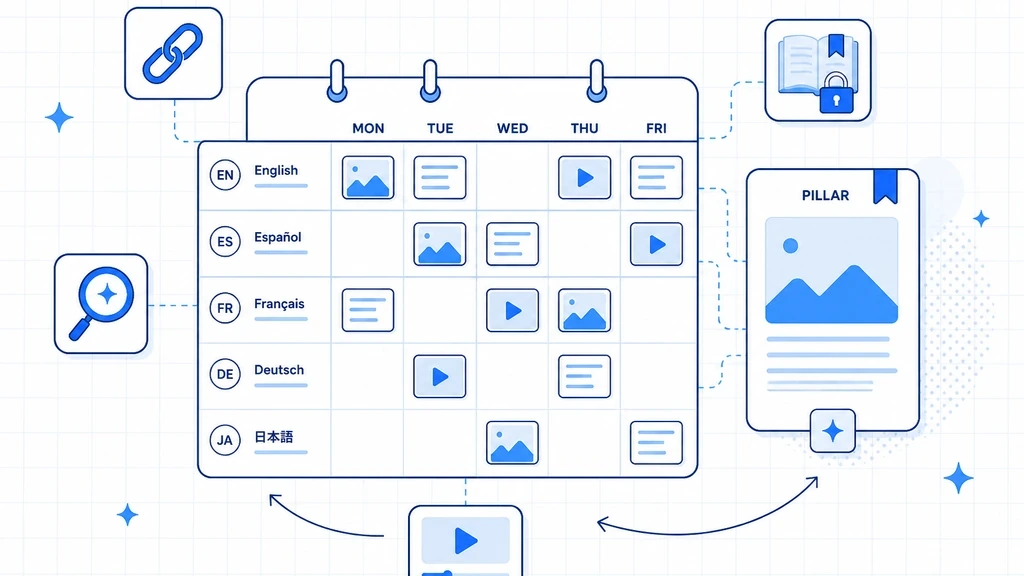
A global content strategy decides which markets, languages, and page types deserve investment—and at what localization depth—before translation volume becomes the plan. Without that layer, teams accumulate a translation backlog: every English URL queued for export, regardless of demand, intent, or operational readiness.
This guide defines global content strategy as an operating model grounded in multilingual SEO architecture: global versus local layers, market prioritization, translation versus localization choices, ownership, URL alignment, measurement by maturity, and careful AI search implications—without cloning thin English pages into new locales.
คู่มือนี้ตอบคำถามอะไรบ้าง
- What is a global content strategy versus a translation backlog?
- How should teams prioritize markets and page types?
- How do translation vs localization decisions shape the content model?
- How should global, regional and local content layers interact?
- What operating model connects SEO, content and localization?
- How should measurement differ by market maturity?
- How do AI search and answer engines change global content planning?
- Which global content strategy mistakes waste budget?
Quick answer: strategy before translation volume
Quick answer: A global content strategy prioritizes markets, page types, and localization depth based on demand and business fit. A translation backlog simply queues English URLs for export. Successful multi-regional and multilingual programs start from clear targeting choices—language, country, or both—before scaling translated page volume. Helpful, people-first content expectations apply in every market; cloning thin English pages into new locales does not create strong language versions.
Strategy answers where and why; translation execution answers how much and how fast.
Global vs local content layers
How should global, regional and local content layers interact?
Think in three layers:
| Layer | Owns | Examples |
|---|---|---|
| Global | Brand story, core product narrative, compliance baselines | Homepage positioning, security whitepapers |
| Regional | Market-specific offers, regulations, campaigns | EMEA pricing, APAC events |
| Local | Language-native demand capture, local proof | In-market case studies, local SEO guides |
Global layers provide reusable source truth. Regional layers adapt go-to-market motion. Local layers capture search demand and cultural context that global copy cannot.
Each layer still needs crawlable language URLs when you target multilingual audiences. Google recommends using different crawlable URLs for each language or region version rather than relying on cookies or browser language alone. Layering strategy must map to URLs and hreflang—not only to folder taxonomy in a CMS.
Google determines page language primarily from visible content; language versions should keep content and navigation predominantly in one language. Mixing layers on one URL without a clear predominant language weakens that signal.
Prioritizing markets and page types
How should teams prioritize markets and page types?
Prioritize with a simple scorecard per market cell (language × country):
- Revenue or pipeline potential
- Competitive intensity in local SERPs
- Operational readiness (shipping, billing, support)
- Legal and compliance complexity
- Existing indexed footprint and Search Console baseline
For page types, sequence investment:
- High-intent commercial pages — pricing, product, integrations (when offers differ)
- Demand-capture content — guides matching validated local keywords
- Support and trust — docs, security, status
- Long-tail editorial — only after core templates perform
Avoid translating the entire English blog on day one. Google helpful-content guidance prioritizes people-first pages; thin or boilerplate-only language versions are weak SEO and weak answer sources.
Translation vs localization in the content model
How do translation vs localization decisions shape the content model?
Translation transfers meaning between languages. Localization adapts meaning, examples, currency, legal copy, imagery, and offers for a market. The content model should tag each template with allowed depth:
- Translate only — stable product facts with low market variance
- Localize — pricing, promotions, legal, market proof
- Transcreate — campaigns and emotionally resonant landing pages
- Hold global — content that must stay identical for compliance
Localization depth should follow keyword and SERP research—not default to full transcreation everywhere. When main content stays untranslated while only chrome localizes, language versions read as thin to users and search systems alike.
Operating model and ownership
What operating model connects SEO, content and localization?
Run global content as a RACI-connected program:
| Function | Owns |
|---|---|
| SEO | Market matrix, keyword research, hreflang/canonical policy |
| Content | Pillars, briefs, editorial calendar per layer |
| Localization | Glossaries, TM, vendor management, MTPE quality |
| Engineering | URL patterns, sitemaps, CMS locale delivery |
| Regional marketing | Local campaigns and market-specific offers |
Cadence: quarterly strategy reviews, monthly locale launch gates, weekly publish sync for active markets. Briefs should reference approved research and required sources before drafts enter translation.
Google advises against automatically redirecting users based on assumed language or location, and recommends a user-visible language or country selector. Operating models should include user choice—not forced redirects that hide alternate crawlable URLs.
Architecture alignment: URLs and annotations
Global strategy fails when content plans ignore URL reality. Align decisions with technical foundations:
- Distinct crawlable URLs per language version
- Hreflang annotations that are reciprocal across alternate sets
- Same-language canonical preferences when regional duplicates exist
- XML sitemaps that help discovery and can carry hreflang when used as an implementation method
Bing Webmaster Guidelines also emphasize crawlable, useful content and clear site structure for indexing across markets. Architecture alignment is not optional for Bing-visible locales.
Strategy documents should include a living URL matrix keyed to content pillars—not an appendix engineers receive after copy is already translated.
Measurement by market maturity
How should measurement differ by market maturity?
| Maturity | Focus metrics | Actions |
|---|---|---|
| ก่อนเปิดตัว | Research coverage, brief approval, staging crawl checks | Block launch on hreflang/canonical gaps |
| Early launch | Index coverage, impressions, critical query clusters | Fix thin templates; expand high-intent URLs |
| Growth | CTR, conversions, share of local SERP features | Invest in localization depth where ROI appears |
| Maintenance | Drift audits, glossary/TM freshness, annotation health | Retire stale URLs; refresh winning content |
One global dashboard rarely fits all cells. Search Console filtered by property or subdirectory supplies locale-specific query truth once URLs are live.
AI search implications for global content
How do AI search and answer engines change global content planning?
AI experiences reward the same fundamentals Google and Bing already emphasize: crawlable URLs, clear language, consolidated duplicates, and people-first content. Helpful, people-first content expectations apply in every market; cloning thin English pages into new locales does not create strong language versions or reliable answer sources.
Practical adjustments for global programs:
- Put direct, citable answers near the top of high-intent guides in each language
- Keep entity labels consistent across locales (glossary discipline)
- Avoid mixed-language templates that confuse visible-language detection
- Do not promise AI citations or rankings from localization tactics alone
AI search increases the cost of publishing thin translated shells—but it does not replace hreflang, canonical, or sitemap discipline.
เช็กลิสต์การติดตั้ง
Which global content strategy mistakes waste budget?
Which global content strategy mistakes waste budget? The expensive ones share a pattern: translation volume scales before strategy, architecture, or measurement matures.
- Translating the full English library before validating demand per market cell
- Treating localization as a post-publish step instead of tagging depth in the content model
- Launching locales without URL/hreflang matrices—forcing emergency fixes under traffic
- Running one global KPI dashboard that hides weak early markets until budget is spent
- Reusing English campaign creative where transcreation was required
- Neglecting glossary and TM governance so rebrands require full retranslation
- Auto-redirecting users by IP instead of offering crawlable alternates and visible switchers
- Publishing boilerplate-only language versions that fail helpful-content expectations
- Assuming AI search removes the need for crawlable, language-clear pages
- Splitting SEO, content, and localization budgets without shared ownership of the market matrix
Budget is best spent on fewer, deeper locale experiences than on shallow copies of every English URL.
Regional governance rhythms
Quarterly global content councils should review: market scorecards, pillar performance by layer (global/regional/local), annotation health, and upcoming launches blocked on research—not on translation vendor capacity alone. Monthly locale gates approve briefs only when keyword research, glossary entries, and URL targets align.
Document decisions in briefs engineers and vendors can execute without re-asking strategy questions every sprint.
Content model tags teams can implement now
Tag each template with: layer (global/regional/local), localizationDepth (translate/localize/transcreate), owner, and marketCells (which hreflang codes may use it). CMS filters then show what is safe to machine-translate versus what requires in-market review—preventing accidental MT on regulated pages while speeding repetitive docs.
AI search and entity clarity across locales
Answer engines and AI Overviews surface content that is crawlable, clearly written, and trustworthy in the user’s language. Global programs that clone thin English pages without glossary discipline produce alternate URLs that are technically valid but weak answer sources. Invest in direct answers and consistent entity labels per locale—not keyword-stuffed clones.
Bing Webmaster Guidelines emphasize crawlable structure and useful content across markets; the same bar applies when planning which locales earn AI-visible guides versus lightweight translations.
Stakeholder alignment workshops
Run a half-day workshop per new region: SEO presents keyword clusters, content presents pillar gaps, localization presents glossary/TM readiness, engineering confirms URL and sitemap plans. Decisions captured in the brief prevent the translation backlog from filling before the strategy is signed off.
When leadership asks for “all pages in six languages,” respond with a phased matrix: wave one high-intent URLs, wave two demand-capture content, wave three long tail—each wave gated on measurement from the prior wave.
Measurement handoffs between teams
SEO should own annotation health dashboards; content owns pillar completion by layer; localization owns glossary/TM version stamps on each release. When metrics disagree—high impressions but weak conversions—revisit localization depth tags before adding more translated URLs.
Early markets deserve patience on conversion metrics while indexation and query coverage mature; mature markets should justify continued spend with localized ROI, not English parity counts.
Strategy documents should name stop rules: conditions that pause translation spend—for example, persistent hreflang errors, sub-threshold indexation after 90 days, or glossary violation rates above an agreed threshold. Stop rules protect budget better than annual reforecasting alone.
Finally, treat English source pages as one input to global planning, not the automatic template list. Some markets need net-new local pillars; others need only pricing and product pages. The matrix makes that visible before vendors quote word counts.
Publish the market matrix where content, SEO, and localization leads can comment asynchronously—strategy fails when it lives only in slide decks.
Review stop rules quarterly: if a locale still shows thin template indexation after two refresh cycles, deprioritize new translation volume until depth improves.
When leadership requests parity with English page counts, respond with the matrix and stop rules above—parity without demand evidence is how global content strategy collapses into an expensive translation backlog.
Strong global content strategy is visible in operational artifacts: an approved matrix, tagged templates, glossary versions tied to releases, and locale dashboards—not in translated page counts alone.
Revisit the matrix after every major English information-architecture change so localized URLs do not inherit obsolete paths by default.
That discipline keeps global content strategy ahead of translation volume instead of chasing it.
พื้นฐานสำหรับการค้นหาแบบดั้งเดิมและเครื่องมือค้นหาคำตอบ
Shared foundations for global content operating models across markets still matter across Google, Bing, and answer engines: crawlable language versions, clear entities, evidence-backed claims, structured data where truthful, and real localization—not English-only shells. Treat the guides below as platform-specific lenses on the same multilingual delivery bar.
คู่มือแพลตฟอร์ม: Google Search
สำหรับ Google Search การค้นพบหน้าเว็บขึ้นอยู่กับ URL ของแต่ละพื้นที่ที่โปรแกรมรวบรวมข้อมูลเข้าถึงได้ โดยใช้ HTML ที่เหมาะกับภาษานั้น ชื่อหน้าและหัวข้อที่ถูกต้อง และ hreflang ที่อ้างอิงถึงกันเมื่อมีหน้าทางเลือก พื้นฐานทางเทคนิคได้แก่ เนื้อหาที่จัดทำดัชนีได้ (ไม่ใช่การสลับภาษาด้วยคุกกี้เพียงอย่างเดียว) เมทาดาทาที่ปรับให้เข้ากับท้องถิ่น Sitemap และการจัดการ canonical อย่างรอบคอบ คุณภาพเนื้อหาหมายถึงการมีเนื้อหาหลักที่ยึดผู้คนเป็นหลักในแต่ละภาษา ส่วนความน่าเชื่อถือมาจากการระบุองค์กรอย่างชัดเจนและแหล่งข้อมูลที่ยืนยันข้อเท็จจริง ไม่ใช่การโฆษณาเครื่องมือแปล ผลต่อเนื้อหาหลายภาษาคือ URL ของแต่ละตลาดหรือภาษาต้องสมบูรณ์ในตัวเอง วัดผลด้วยการตรวจสอบความครอบคลุมใน Search Console และ URL Inspection แยกตามพื้นที่ สิ่งที่ทราบและไม่แน่ชัด: Google อธิบายแนวทางเกี่ยวกับเนื้อหาหลายภาษาและ hreflang ไว้ แต่ไม่ได้รับประกันอันดับจาก CMS หรือขั้นตอนการทำ MTPE ใด ๆ
คู่มือแพลตฟอร์ม: Bing
Bing ค้นพบและจัดทำดัชนีหน้าเว็บหลายภาษาที่โปรแกรมรวบรวมข้อมูลเข้าถึงได้ โดยมีโครงสร้างชัดเจน คล้ายกับความคาดหวังของ Google ในเรื่องความชัดเจนของ URL และเนื้อหา พื้นฐานทางเทคนิคได้แก่ URL ของแต่ละพื้นที่ที่ดึงข้อมูลได้ เนื้อหาที่เป็นประโยชน์ และการติดตามผ่าน Bing Webmaster Tools ควรใช้หัวข้อ ข้อกล่าวอ้าง และคำถามที่พบบ่อยซึ่งปรับให้เข้ากับท้องถิ่น แทนการแปลเฉพาะส่วนประกอบของหน้าเว็บ สัญญาณความน่าเชื่อถือยังคงขึ้นอยู่กับแหล่งข้อมูลที่ไว้วางใจได้และเอนทิตีที่สอดคล้องกัน ผลต่อเนื้อหาหลายภาษาคือ อย่าซ่อนภาษาต่าง ๆ ไว้หลังปุ่มสลับภาษาที่ทำงานเฉพาะฝั่งไคลเอนต์ วัดการจัดทำดัชนีและสถิติการรวบรวมข้อมูลใน Bing Webmaster Tools สิ่งที่ทราบและไม่แน่ชัด: แนวทางของ Bing เน้นเนื้อหาที่เป็นประโยชน์และโปรแกรมรวบรวมข้อมูลเข้าถึงได้ อย่ากุเรื่องปัจจัยจัดอันดับเฉพาะของ Bing ที่เกี่ยวกับเครื่องมือแปล
คู่มือแพลตฟอร์ม: ChatGPT
ChatGPT อาจอ้างอิงหรือสรุปหน้าเว็บที่เข้าถึงได้แบบสาธารณะ เมื่อมีเวอร์ชันภาษาที่ชัดเจนและพร้อมใช้ตอบคำถาม การค้นพบเนื้อหาไม่ได้อาศัยการจัดอันดับจากการรวบรวมข้อมูลแบบทั่วไป แต่การมองเห็นคือการได้รับเลือกเป็นแหล่งข้อมูลหรือถูกอ้างถึงในคำตอบ พื้นฐานทางเทคนิคยังคงเริ่มจาก URL ที่มี HTML ซึ่งเข้าถึงได้ ไม่ใช่วิดเจ็ตซ้อนทับที่ซ่อนข้อความ คุณภาพของเนื้อหาที่ช่วยได้ ได้แก่ คำตอบตรงประเด็น คำถามที่พบบ่อย และการใช้คำศัพท์อย่างสม่ำเสมอตามอภิธานศัพท์ ความน่าเชื่อถือมาจากหลักฐานและการใช้ชื่อเอนทิตีอย่างสอดคล้องกันในแต่ละภาษา ข้อควรคำนึงสำหรับหลายภาษา: หน้าในแต่ละภาษาควรอ่านเข้าใจได้ด้วยตัวเอง การวัดผลยังไม่สมบูรณ์—ควรมองการตรวจสอบการอ้างอิงเป็นสมมติฐาน สิ่งที่ทราบกับสิ่งที่ยังไม่แน่ชัด: ไม่มีหลักประกันที่มีเอกสารรองรับว่า MTPE หรือการผสานรวมกับ CMS ใด ๆ จะทำให้ได้รับการอ้างอิงจาก ChatGPT
คู่มือแพลตฟอร์ม: Gemini
Gemini และประสบการณ์ AI อื่น ๆ ที่เกี่ยวข้องกับ Google ได้ประโยชน์จากการใช้เอนทิตีอย่างสอดคล้องกัน ข้อมูลที่มีโครงสร้างเมื่อถูกต้องแม่นยำ และหน้าที่แปลเป็นภาษาท้องถิ่นซึ่งจัดทำดัชนีได้ การมองเห็นหมายถึงการได้รับการอ้างอิงหรือจดจำ ไม่ใช่การแต่งปัจจัยการจัดอันดับของ Gemini ขึ้นมาเอง พื้นฐานทางเทคนิคสอดคล้องกับความสามารถในการรวบรวมข้อมูลของ Google Search และคุณภาพของเมทาดาทา เนื้อหาควรนำเสนอข้อกล่าวอ้างและคำจำกัดความอย่างชัดเจนในแต่ละภาษา ความน่าเชื่อถือขึ้นอยู่กับการใช้ชื่อองค์กรอย่างสม่ำเสมอและการมีข้อมูลยืนยัน ข้อควรคำนึงสำหรับหลายภาษา: การควบคุมชื่อผลิตภัณฑ์ด้วยอภิธานศัพท์ช่วยลดความสับสนระหว่างภาษา วัดผลตามปกติด้วย Search Console และสุ่มตรวจคำตอบจาก AI ในเชิงคุณภาพ สิ่งที่ทราบกับสิ่งที่ยังไม่แน่ชัด: พฤติกรรมของ Gemini ใช้แทนแนวทางที่มีเอกสารรองรับของ Google Search เกี่ยวกับ hreflang และเวอร์ชันภาษาไม่ได้
คู่มือแพลตฟอร์ม: Google AI Overviews
Google AI Overviews อาจใส่ลิงก์ไปยังหน้าที่ใช้สนับสนุนข้อมูล แต่หลักเกณฑ์ด้านการมีสิทธิ์ยังคงยึดเนื้อหาที่ให้ความสำคัญกับผู้ใช้และจัดทำดัชนีได้ ฟีเจอร์นี้ไม่ใช่เครื่องมือเปลี่ยนภาษาและใช้แทน hreflang ไม่ได้ พื้นฐานทางเทคนิคยังคงเป็น HTML ของแต่ละภาษาที่รวบรวมข้อมูลได้และข้อมูลที่มีโครงสร้างซึ่งตรงตามความจริง คุณภาพของเนื้อหาประกอบด้วยคำตอบกระชับและหัวข้อที่ชัดเจนในแต่ละภาษา สัญญาณด้านความน่าเชื่อถือเป็นไปตามความคาดหวังของเนื้อหาที่เป็นประโยชน์ ข้อควรคำนึงสำหรับหลายภาษา: ไม่มีการรับประกันว่าหน้าแปลใด ๆ จะปรากฏใน AI Overviews วัดผลด้วยรายงาน Generative ใน Search Console หากมีให้ใช้งาน และแยกจากตัวชี้วัดการจัดทำดัชนีแบบดั้งเดิม สิ่งที่ทราบกับสิ่งที่ยังไม่แน่ชัด: ไม่มีเวิร์กโฟลว์การแปลใดรับประกันการปรากฏใน AI Overviews ได้
GlotEO ช่วยอะไรได้บ้าง
Global content strategy needs tooling that connects research, briefs, drafts, and locale publishing—not a translation queue alone. The GlotEO multilingual SEO platform supports that operating model: keeping pillars, keyword research, and language versions aligned while engineering ships crawlable URLs and annotations.
Use how international SEO differs from multilingual SEO when framing language versus country decisions at the strategy stage. Compare rollout options on GlotEO pricing and plans when scaling from pilot markets to a full matrix.
Explore GlotEO multilingual SEO to operationalize global content strategy from prioritization through localized publishing.
แหล่งอ้างอิง
- แนวทางที่อ้างอิงในบทความนี้ (หลักเกณฑ์สำหรับผู้ดูแลเว็บของ Bing)
- แนวทางที่อ้างอิงในบทความนี้ (วิธีกำหนด URL หลักด้วย rel=canonical และวิธีอื่น ๆ)
- แนวทางที่อ้างอิงในบทความนี้ (การสร้างเนื้อหาที่เป็นประโยชน์ น่าเชื่อถือ และให้ความสำคัญกับผู้ใช้)
- แนวทางที่อ้างอิงในบทความนี้ (แจ้ง Google เกี่ยวกับหน้าเวอร์ชันภาษาต่าง ๆ)
- แนวทางที่อ้างอิงในบทความนี้ (การจัดการเว็บไซต์หลายภูมิภาคและหลายภาษา)
- แนวทางที่อ้างอิงในบทความนี้ (เรียนรู้เกี่ยวกับแผนผังเว็บไซต์)