



Międzynarodowe badanie słów kluczowych
Opracuj wielojęzyczne badanie słów kluczowych, zaczynając od rynku: uwzględnij język i kraj, sprawdź lokalne wyniki wyszukiwania, przygotuj matryce adresów URL i mierz efekty w Search Console — zamiast ograniczać się do tłumaczenia angielskich haseł.
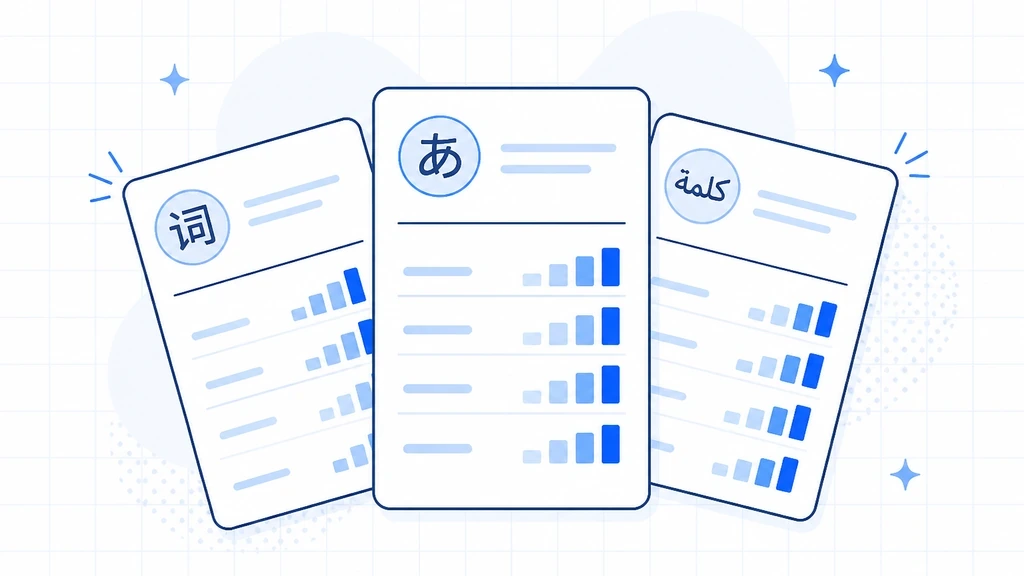
International keyword research is not a translation exercise. Search demand, query language, and SERP layouts differ by market even when the product is identical. Teams that export English seed lists through a dictionary—and call it research—often publish crawlable language URLs that do not match how people actually search locally.
This guide teaches a market-first process: frame language versus country targeting, build seed lists per market, validate intent in local SERPs, and connect findings to URL and content matrices—grounded in Google’s multilingual site guidance, not invented ranking shortcuts.
Na te pytania odpowiada poradnik
- Why is translating English keywords insufficient for international SEO?
- How should language targeting and country targeting change keyword sets?
- What process builds seed lists per market?
- How do you validate local search intent and SERP features?
- How should keyword research inform URL and content matrices?
- How do you handle one language across multiple countries?
- What tools and Search Console signals support ongoing research?
- Which international keyword research mistakes are most common?
Quick answer: research demand in-market, do not only translate
Quick answer: Research keywords in each target language and market using local tools, SERP inspection, and post-launch Search Console data—not by translating English seeds word-for-word. Google distinguishes multi-regional and multilingual sites; your keyword sets should follow whether you target languages, countries, or both. Geotargeting signals are imperfect; local language, currency, and on-page cues still matter alongside hreflang and URL structure.
Translating English keywords tells you what words could be used. It does not tell you what users do search for, which SERP features appear, or whether intent matches your page type.
Language vs country keyword frames
How should language targeting and country targeting change keyword sets?
Google defines multilingual sites as offering content in more than one language and multi-regional sites as explicitly targeting users in different countries. Keyword planning must mirror that split:
| Frame | Keyword question | Przykład |
|---|---|---|
| Język | How do speakers of this language query? | French queries for Canada vs France |
| Country | How do buyers in this market query in their preferred language? | German queries in Austria vs Germany |
| Combined | Which language × country cells need distinct URL targets? | en-US vs en-GB pricing terms |
When you target a language globally, one keyword set may suffice with regional spelling variants noted. When you target countries separately—even in one language—currency, shipping, regulations, and competitive SERPs can change the keyword list entirely.
Google recommends different crawlable URLs for each language or region version rather than relying on cookies or browser language alone. Keyword research should inform which URLs earn investment, not the reverse.
Google advises against automatically redirecting users based on assumed language or location, and recommends a user-visible language or country selector. Research should respect that users may land on the “wrong” locale URL and switch manually.
Seed list process per market
What process builds seed lists per market?
Use a repeatable pipeline per language or country cell:
- Define the cell — language only, country only, or combined (e.g.,
es-MX) - Gather jobs-to-be-done — interviews, support tickets, sales calls, existing analytics
- Collect competitor and SERP-visible terms — inspect top results in the local Google interface (or Bing where relevant)
- Expand with local-language tools — autosuggest, related searches, People Also Ask
- Merge English source concepts as hints only — map ideas, not literal strings
- Dedupe and cluster — group by intent (informational, commercial, transactional)
- Prioritize by business fit — not raw volume alone
- Document approved phrasing — feed localization glossaries where terms are stable
Each cell gets its own seed document. Shared languages across countries (Spanish in Mexico and Spain, English in the US and UK) still warrant separate passes when SERPs or offers differ.
Intent and SERP validation
How do you validate local search intent and SERP features?
Volume metrics without SERP context mislead international teams. For each priority cluster:
- Search the term in the target market interface (correct country proxy or native reviewers)
- Classify intent: guide, comparison, product page, local pack, etc.
- Note SERP features: AI Overviews, featured snippets, video, marketplace dominance
- Compare winning page types—not just keywords—to your planned template
- Flag English-only SERP dominance (may signal need for localized proof, not English reuse)
Google determines page language primarily from visible content; language versions should keep content and navigation predominantly in one language. Intent validation ensures you build the right page type in the right language—not a translated blog post where the SERP expects a product comparison.
Google helpful-content guidance prioritizes people-first pages; thin or boilerplate-only language versions are weak SEO and weak answer sources. If local intent requires market-specific examples, pricing, or compliance copy, keyword approval should trigger localization depth—not word-for-word translation.
From keywords to content and URL matrices
How should keyword research inform URL and content matrices?
Turn keyword clusters into an explicit matrix:
| Market cell | Primary cluster | Page type | URL pattern | hreflang code |
|---|---|---|---|---|
| de-DE | “website übersetzen” | Guide | /de/blog/... | de-DE |
| fr-CA | “traduction site web” | Guide | /fr-ca/... | fr-CA |
Rules of thumb:
- One primary intent per URL; avoid multi-intent mashups
- Align title, H1, and body language with the approved local cluster
- Hreflang annotations tell Google about alternate language or regional URLs and must be reciprocal across the set of pages they describe
- Each language or locale URL should have a clear canonical that prefers the same-language preferred URL when duplicates exist
- XML sitemaps help discovery of language versions and can carry hreflang annotations when used as an implementation method
Keyword research should drive which rows exist in the matrix—not justify cloning every English URL regardless of demand.
Shared language across countries
How do you handle one language across multiple countries?
English in the US and UK, Spanish in Mexico and Spain, and Portuguese in Brazil and Portugal are common pain points.
Options:
- Single URL with generic language code (
en,es) when content truly serves all speakers and offers do not differ - Regional URLs (
en-US,en-GB) when pricing, shipping, spelling, or regulatory copy differs - Hybrid — global
enfallback plus regional overrides for high-stakes pages (pricing, legal)
Geotargeting signals are imperfect; local language, currency, and on-page cues still matter alongside hreflang and URL structure. Even with regional hreflang, inspect whether SERPs differ enough to warrant separate keyword targets and page templates.
Provide user-visible switchers; do not force redirects that hide alternate versions from crawlers and users.
Measurement with Search Console and analytics
What tools and Search Console signals support ongoing research?
Official search documentation does not prescribe a single keyword toolchain. Treat tool choice as operational. Google Search Console (and Bing Webmaster Tools where indexed) supplies post-launch truth:
- Queries and pages filtered by property or subdirectory per locale
- Impressions and CTR shifts after localization
- Index coverage and hreflang errors after matrix changes
- Compare query language to on-page language for drift
Bing Webmaster Guidelines emphasize crawlable, useful content and clear site structure for indexing across markets—measurement should confirm Bing can crawl locale URLs you care about, not only Google.
Refresh seed lists quarterly in mature markets; monthly during aggressive launch phases. Feed winning queries back into glossaries as approved variants.
Lista kontrolna wdrożenia
Częste błędy
Which international keyword research mistakes are most common?
- Translating English seeds verbatim without local SERP validation
- Ignoring country differences within the same language
- Choosing URLs before research and forcing keywords to fit
- Treating volume as intent without inspecting SERP layout
- Skipping glossary handoff so approved terms drift in translation
- Publishing thin translated templates that fail helpful-content expectations
- Cookie-based locale switching without crawlable language URLs
- Non-reciprocal hreflang after launching matrix rows
- Same-language duplicates without clear canonical preference
- One-time research with no Search Console feedback loop
Deeper SERP validation patterns
When validating intent, capture three artifacts per priority cluster: a screenshot or notes on dominant page type, a list of recurring modifiers (pricing, free, enterprise, near me), and whether results skew editorial or product-led. Clusters where the SERP shows local packs, marketplaces, or AI Overviews may need different templates than a translated English blog post.
Re-run validation when Google refreshes SERP layouts in a market—especially for YMYL topics where local compliance language appears in titles. A keyword that looked informational six months ago may have shifted commercial.
Connecting research to glossaries and translation
Approved keyword phrasing should flow into localization glossaries as preferred renderings—not as mandatory insertions in every sentence, but as constraints on titles, H1s, and anchor text where research supports it. This closes the loop between SEO research and translation quality: linguists see why a term matters, and SEOs trust published copy to reflect local demand.
Without glossary handoff, teams often publish crawlable URLs whose visible language does not match the queries they researched—undermining both user trust and the clarity Google expects from people-first pages.
Budget mistakes that look like research
Which international keyword research mistakes are most common? Beyond the list above, watch for:
- Researching once per language when country SERPs differ materially
- Letting English information architecture dictate local content types
- Ignoring zero-volume strategic terms that appear in sales cycles but not keyword tools
- Skipping Bing validation in markets where Bing share matters for B2B
- Launching hreflang clusters before keyword-to-URL mapping is stable—forcing rework across annotations
Research is cheaper than rewriting fifty localized URLs because hreflang and canonical rules were built on the wrong intent map.
Tooling boundaries
Official Google and Bing documentation describe crawlability, language clarity, and helpful content—they do not endorse a single keyword research product. Treat tools as interchangeable inputs to the process above: local autosuggest, SERP scraping, Search Console, analytics landing pages, and customer language from support tickets.
Document which tool produced each seed list so teams can reproduce research during audits. The process matters more than the vendor logo on the export.
Matrix maintenance
URL and content matrices are living documents. When English pillars rename or merge, update matrix rows before retranslation propagates outdated paths. Pair matrix changes with hreflang regression checks—reciprocal annotations break silently when URLs move but annotations lag.
For shared languages across countries, maintain a column for spellingVariant, currency, and legalOwner so keyword research maps to the correct regional URL—not an assumed default.
Post-launch iteration cadence
Schedule a 30-day and 90-day review for each new locale cell. At 30 days, inspect index coverage and first-query impressions in Search Console; at 90 days, compare winning queries to your seed clusters and update glossaries with phrasing that already earns visibility. Markets that underperform often need template changes—not more translated pages from the English backlog.
Invite localization leads to these reviews so keyword learnings become enforced terminology rather than one-off SEO notes.
Keep a “SERP snapshot” appendix per cluster: date, market, dominant page types, and notes on regulatory language in titles. Future you—and future vendors—will need that context when refreshing seeds.
Document who owns each market cell in the matrix so research updates do not stall waiting for a single global SEO lead.
Podstawy tradycyjnego wyszukiwania i wyszukiwarek odpowiedzi
Shared foundations for in-market keyword research feeding locale content still matter across Google, Bing, and answer engines: crawlable language versions, clear entities, evidence-backed claims, structured data where truthful, and real localization—not English-only shells. Treat the guides below as platform-specific lenses on the same multilingual delivery bar.
Przewodnik po platformie: Google Search
W wyszukiwarce Google odkrywanie stron zależy od dostępnych do indeksowania adresów URL poszczególnych wersji językowych, kodu HTML dostosowanego do danego języka, poprawnych tytułów i nagłówków oraz wzajemnych oznaczeń hreflang, jeśli istnieją wersje alternatywne. Podstawy techniczne obejmują treści możliwe do indeksowania (a nie przełączniki działające wyłącznie za pomocą plików cookie), lokalizowane metadane, mapy witryn i prawidłowe użycie adresów kanonicznych. Jakość treści oznacza wartościowe, tworzone z myślą o odbiorcach materiały w każdym języku; autorytet buduje się dzięki jasnej identyfikacji organizacji i potwierdzającym ją źródłom, a nie promocji narzędzi tłumaczeniowych. Wniosek dotyczący wielu języków: adres URL każdego rynku lub języka musi być samodzielną stroną. Skuteczność mierz za pomocą raportu dotyczącego indeksowania i narzędzia do sprawdzania adresów URL w Search Console, osobno dla każdej wersji językowej. Co wiadomo, a co pozostaje niepewne: Google opisuje działanie obsługi wielu języków i hreflang, ale nie gwarantuje pozycji w wynikach uzyskanych dzięki konkretnemu CMS-owi ani procesowi MTPE.
Przewodnik po platformie: Bing
Bing znajduje i indeksuje wielojęzyczne strony, które można indeksować i które mają przejrzystą strukturę — podobnie jak Google oczekuje czytelnych adresów URL i treści. Podstawy techniczne obejmują dostępne dla robotów adresy URL wersji językowych, przydatne treści i monitorowanie w Bing Webmaster Tools. Zamiast tłumaczyć wyłącznie elementy nawigacyjne, lokalizuj nagłówki, twierdzenia i sekcje FAQ. Sygnały autorytetu nadal zależą od wiarygodnych źródeł i spójnych encji. Wniosek dla stron wielojęzycznych: nie ukrywaj wersji językowych za przełącznikami działającymi wyłącznie po stronie klienta. Monitoruj indeksowanie i statystyki indeksowania w Bing Webmaster Tools. Wiadomo, a co pozostaje niepewne: wytyczne Binga podkreślają znaczenie przydatnych treści możliwych do indeksowania; nie należy wymyślać czynników rankingowych Binga związanych z narzędziami tłumaczeniowymi.
Przewodnik po platformie: ChatGPT
ChatGPT może cytować lub streszczać publicznie dostępne strony, jeśli ich wersje językowe są jasno oznaczone, a treści nadają się do udzielania odpowiedzi. Odkrywanie stron nie odbywa się na zasadzie tradycyjnego rankingu wyników indeksowania; widoczność polega na tym, że strona zostaje wybrana jako źródło lub przywołana w odpowiedzi. Podstawy techniczne nadal zaczynają się od dostępnych adresów URL z kodem HTML — nie od nakładek widżetów, które ukrywają treść. Pomocne cechy treści to bezpośrednie odpowiedzi, sekcje FAQ i spójna terminologia oparta na glosariuszach. Autorytet budują rzetelne dowody i spójne informacje o podmiotach we wszystkich wersjach językowych. Wniosek dotyczący wielu języków: każda strona w danym języku powinna być zrozumiała sama w sobie. Pomiar jest niedoskonały — wyniki kontroli cytowań traktuj jako hipotezy. Co wiadomo, a co pozostaje niepewne: nie ma udokumentowanej gwarancji, że MTPE ani integracja z dowolnym CMS-em zapewnią cytowania w ChatGPT.
Przewodnik po platformie: Gemini
Gemini i powiązane z nim funkcje AI Google korzystają na spójnych encjach, prawidłowych danych strukturalnych i zlokalizowanych stronach możliwych do indeksowania. Widoczność polega na tym, że treść zostaje przywołana lub rozpoznana — nie należy wymyślać czynników rankingowych Gemini. Podstawy techniczne pokrywają się z wymaganiami Google Search dotyczącymi indeksowania i jakości metadanych. Treści powinny przedstawiać jasne twierdzenia i definicje w każdym języku. Autorytet zależy od spójnej prezentacji organizacji i potwierdzających źródeł. Wniosek dla stron wielojęzycznych: nazwy produktów kontrolowane za pomocą glosariusza ograniczają nieporozumienia między wersjami językowymi. Mierz wyniki tradycyjnie za pomocą Search Console i jakościowo, analizując wybrane odpowiedzi AI. Wiadomo, a co pozostaje niepewne: działanie Gemini nie zastępuje udokumentowanych wytycznych Google Search dotyczących hreflang i wersji językowych.
Przewodnik po platformie: Google AI Overviews
Google AI Overviews może zawierać linki do stron źródłowych; warunkiem kwalifikacji pozostają przydatne dla odbiorców treści, które można indeksować. Ta funkcja nie przełącza języka ani nie zastępuje hreflang. Podstawy techniczne nadal obejmują dostępny dla robotów HTML wersji językowej i rzetelne dane strukturalne. Pomocne cechy treści to zwięzłe odpowiedzi i jasne nagłówki w każdym języku. Sygnały autorytetu są zbliżone do tych, które wiążą się z przydatnymi treściami. Wniosek dla stron wielojęzycznych: nie ma gwarancji, że przetłumaczona strona pojawi się w AI Overviews. Jeśli są dostępne, monitoruj raporty generatywne w Search Console, a tradycyjne wskaźniki indeksowania analizuj oddzielnie. Wiadomo, a co pozostaje niepewne: żaden proces tłumaczeniowy nie może zagwarantować pojawienia się strony w AI Overviews.
Rola GlotEO
International keyword research connects to execution: approved terms, localized drafts, and crawlable language URLs must stay aligned. GlotEO multilingual SEO platform helps teams tie research outputs to briefs, glossaries, and publishing workflows instead of losing clusters in disconnected spreadsheets.
Pair research with how international SEO differs from multilingual SEO when framing language versus country targets. Review GlotEO pricing and plans when scaling research-driven locale expansion across many URLs.
Explore GlotEO multilingual SEO to operationalize market-first keyword research alongside translation and site architecture work.
Źródła
- Źródło wytycznych przytoczonych w tym artykule (Wytyczne Bing Webmaster)
- Źródło wytycznych przytoczonych w tym artykule (Jak określić kanoniczny adres URL za pomocą rel=canonical i innych metod)
- Źródło wytycznych przytoczonych w tym artykule (Tworzenie przydatnych, rzetelnych treści stawiających ludzi na pierwszym miejscu)
- Źródło wytycznych przytoczonych w tym artykule (Poinformuj Google o zlokalizowanych wersjach swojej strony)
- Źródło wytycznych przytoczonych w tym artykule (Zarządzanie witrynami wieloregionalnymi i wielojęzycznymi)
- Źródło wytycznych przytoczonych w tym artykule (Informacje o mapach witryn)