



MTPE of menselijke vertaling voor websites: een praktische gids
Kies voor MTPE, menselijke vertaling of een hybride workflow voor je website. Houd daarbij rekening met het paginatype, terminologielijsten, kwaliteitscontroles en de kwaliteitseisen voor meertalige SEO.
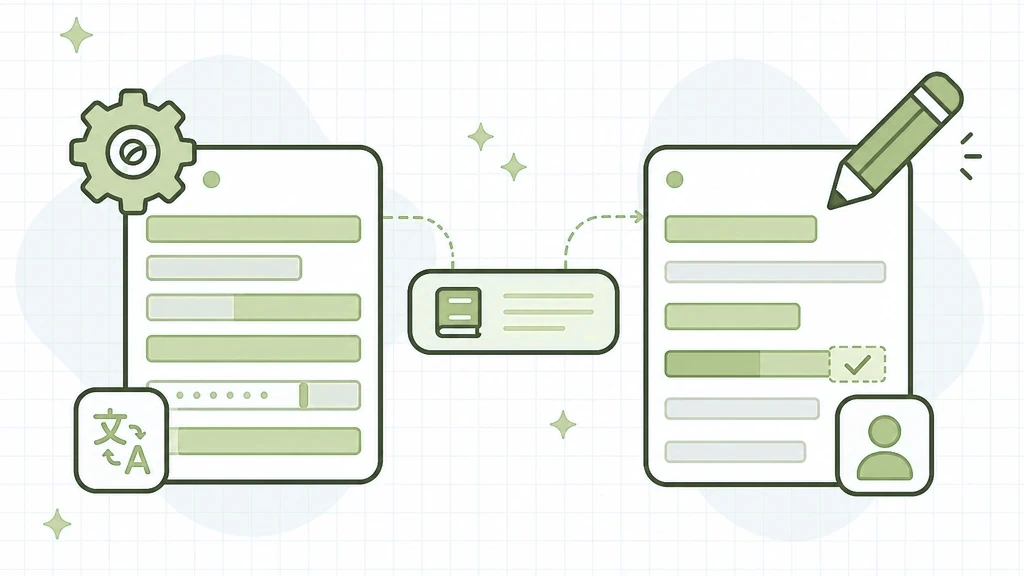
Localization managers face the same question on every website program: should we machine-translate and ship, pay for full human translation, or use machine translation post-editing (MTPE)? The honest answer depends on page type, risk, glossary maturity, and whether you can publish crawlable, people-first language versions—not on generic “MT is good now” hype.
This guide compares MTPE versus human translation for websites with operational criteria tied to multilingual SEO and helpful content expectations from Google and Bing. You will learn definitions, page-type fit, glossary and TM practices, legal and conversion guardrails, QA gates, and how to compare cost, speed, and risk without inventing statistics.
Quick answer: MTPE is edited MT, not raw publish
Short answer: MTPE is machine translation revised by a human editor before publish. Raw machine output pasted into localized URLs is not MTPE—and it often creates thin or mixed-language pages that fail people-first content expectations.
Google helpful-content guidance prioritizes people-first pages; thin or boilerplate-only language versions are weak SEO and weak answer sources. People-first helpful content expectations apply to every language version; low-quality machine-only pages can create thin or unhelpful locale experiences.
Use MTPE when speed and cost matter but a human must fix terminology, tone, and factual clarity. Use full human translation when brand voice, legal precision, or conversion copy cannot tolerate MT errors. Never skip QA gates for either path.
Definitions: MT, MTPE and human translation
Machine translation (MT) — automated conversion from source to target language with no guaranteed human review before publish.
Machine translation post-editing (MTPE) — MT followed by human editing (light or full) to meet quality thresholds before content ships.
Human translation — linguists translate from source without MT in the loop, or rewrite MT so thoroughly it is effectively new copy.
Boilerplate-only or poorly translated main content weakens language versions even when chrome is translated. Translating navigation while leaving body copy in the source language is a common failure mode—not a workflow choice.
Google determines page language primarily from visible content; language versions should keep content and navigation predominantly in one language.
Why quality matters for language-version SEO
Multilingual SEO starts with crawlable locale URLs—Google recommends different URLs per language rather than cookies alone—but quality determines whether those URLs deserve visibility.
Hreflang annotations tell Google about alternate language URLs and must be reciprocal when alternates exist. XML sitemaps help discovery and can carry hreflang. Canonicals should prefer same-language URLs when duplicates exist. None of these annotations rescue unhelpful body copy.
Translation quality affects:
- Language detection — mixed or sloppy text confuses users and algorithms reading visible content.
- Helpful content signals — thin MT pages add URLs without adding value.
- Trust on conversion and legal pages — errors carry business risk beyond SEO.
- Bing indexing — Bing Webmaster Guidelines emphasize crawlable, useful content and clear structure across markets.
Read international SEO versus multilingual SEO when strategy precedes workflow choice.
Page-type decision matrix
Not every page deserves the same workflow. A practical split:
MTPE-friendly (with glossary + review):
- Long-tail help articles with factual, repetitive structure
- Internal documentation mirrored publicly
- Product feature lists with stable terminology
- Glossary-backed UI strings and microcopy batches
Human-first or heavy MTPE:
- Homepage and core landing pages
- Pricing and plan comparison pages
- Customer stories and brand campaigns
- Highly idiomatic blog thought leadership
Human-only or legal review mandatory:
- Terms of service, privacy policies, regulatory disclosures
- Safety, medical, or financial claims
- Employment and contractual templates
Map workflows in a routing table during brief intake—not ad hoc per vendor quote.
Glossary, TM and style guides
MTPE reliability scales with terminology control:
- Glossary — approved product terms, forbidden translations, and market-specific variants.
- Translation memory (TM) — reuse vetted sentences; update TM after human corrections.
- Style guide — tone, formality, inclusivity, and punctuation per locale.
- Do-not-translate list — product names, integration labels, code tokens.
Without glossary enforcement, MTPE editors spend time fixing the same terminology errors on every page—erasing MT speed gains.
Feed MT engines glossary constraints where supported, then still run human post-edit on high-visibility URLs.
Risk pages: legal, brand and conversion
Legal, brand, and conversion pages need stricter gates:
- Legal — full human translation plus jurisdictional review; MTPE is rarely appropriate for binding text.
- Brand — taglines and campaigns often require transcreation, not literal MTPE.
- Conversion — pricing CTAs, guarantee language, and trial terms must be accurate; light MTPE may suffice for secondary markets only after testing.
Google advises against automatically redirecting users based on assumed language; pair high-quality localized copy with visible language selectors on crawlable URLs.
Avoid publishing raw MT on checkout, signup, or compliance flows even when marketing pages use MTPE.
QA and publish gates
After MTPE—or any translation—run QA before publish:
- Locale completeness — no empty fields or English fallbacks on localized URLs.
- Language consistency — body, nav, buttons, and errors match target locale.
- Terminology audit — sample against glossary and TM.
- Link and slug check — internal links stay in-locale; hreflang pairs reciprocal.
- Metadata review — localized titles and descriptions, not English duplicates.
- Spot human read — native speaker review on highest-traffic templates.
Block publish when sample pages fail helpful-content smell tests: thin, repetitive, or obvious MT artifacts on primary content.
Each language URL should remain a distinct crawlable URL with clear canonicals—quality QA includes technical checks, not just linguistic ones.
Cost, speed and risk tradeoffs
Compare workflows honestly:
| Dimension | Raw MT | MTPE | Human translation |
|---|---|---|---|
| Speed | Fastest | Fast with edit queue | Slowest |
| Cost | Lowest direct cost | Mid | Highest direct cost |
| SEO / UX risk | Highest | Moderate if gated | Lowest when well managed |
| Scales with glossary | Poorly | Well | Well with TM |
Hidden costs include rework after brand incidents, legal review cycles, support tickets from confused users, and de-indexing thin locale folders. A cheap MT launch that requires emergency human rewrite often costs more than planned MTPE.
Speed matters for launch deadlines—but publishing low-quality machine-only pages can create technical debt across hreflang clusters and sitemaps you must maintain later.
Implementatiechecklist
De basis voor traditionele zoekmachines en antwoordengines
Shared foundations for MTPE and human review quality on locale pages still matter across Google, Bing, and answer engines: crawlable language versions, clear entities, evidence-backed claims, structured data where truthful, and real localization—not English-only shells. Treat the guides below as platform-specific lenses on the same multilingual delivery bar.
Platformgids: Google Zoeken
In Google Zoeken hangt vindbaarheid af van crawlbare URL's per taalregio met HTML in de juiste taal, passende titels en koppen en wederkerige hreflang-tags wanneer er alternatieven zijn. De technische basis bestaat uit indexeerbare content (niet alleen via cookies geactiveerde taalwissels), gelokaliseerde metadata, sitemaps en zorgvuldig gebruik van canonieke URL's. Kwalitatieve content begint bij hoofdcontent die in elke taal voor mensen is geschreven; autoriteit komt voort uit een herkenbare organisatie-identiteit en bevestiging door betrouwbare bronnen — niet uit marketingclaims over vertaaltools. Voor meertalige sites betekent dit dat elke URL voor een markt of taal op zichzelf moet staan. Meet de resultaten per taalregio met de dekking in Search Console en URL-inspectie. Bekend en onzeker: Google documenteert hoe meertalige content en hreflang werken, maar garandeert geen hogere posities op basis van een CMS of MTPE-workflow.
Platformgids: Bing
Bing ontdekt en indexeert crawlbare meertalige pagina's met een duidelijke structuur, vergelijkbaar met Google, dat heldere URL's en content verwacht. De technische basis bestaat uit bereikbare URL's per taalregio, nuttige content en monitoring via Bing Webmaster Tools. Geef de voorkeur aan gelokaliseerde koppen, claims en FAQ's boven een vertaling die alleen UI-elementen aanpast. Signalen van autoriteit blijven afhankelijk van betrouwbare bronnen en consistente entiteiten. Voor meertalige sites betekent dit: verberg talen niet achter schakelaars die alleen aan de clientzijde werken. Meet de indexering en crawlstatistieken in Bing Webmaster Tools. Bekend en onzeker: de richtlijnen van Bing benadrukken crawlbare, nuttige content; verzin geen specifieke rankingfactoren van Bing voor vertaaltools.
Platformgids: ChatGPT
ChatGPT kan verwijzen naar openbaar toegankelijke pagina's of deze samenvatten als de taalversies duidelijk zijn en geschikt zijn om vragen te beantwoorden. Dit is geen traditionele crawlranking: zichtbaarheid betekent dat een pagina als bron wordt geselecteerd of in antwoorden wordt genoemd. De technische basis begint nog steeds bij toegankelijke HTML-URL's — niet bij widgetlagen die tekst verbergen. Nuttige contentkenmerken zijn directe antwoorden, FAQ's en consistente terminologie uit woordenlijsten. Autoriteit komt voort uit bewijs en consistente entiteiten in alle taalregio's. Voor meertalige sites betekent dit dat elke pagina in een taalregio zelfstandig leesbaar moet zijn. Meten is lastig: zie controles op vermeldingen als hypotheses. Bekend en onzeker: er is geen gedocumenteerde garantie dat MTPE of een CMS-integratie vermeldingen in ChatGPT oplevert.
Platformgids: Gemini
Gemini en verwante AI-functies van Google zijn gebaat bij consistente entiteiten, waarheidsgetrouwe gestructureerde gegevens en indexeerbare pagina's in de juiste taalregio. Het draait om vermeldingen of herkenning — niet om het verzinnen van rankingfactoren voor Gemini. De technische basis overlapt met de crawlbaarheid en metadatakwaliteit van Google Zoeken. Content moet duidelijke claims en definities in elke taal bevatten. Autoriteit hangt af van een consistente organisatie-identiteit en bevestiging door betrouwbare bronnen. Voor meertalige sites verkleinen productnamen die volgens een woordenlijst worden beheerd de kans op verwarring tussen taalregio's. Meet op de gebruikelijke manier via Search Console en beoordeel daarnaast steekproefsgewijs AI-antwoorden. Bekend en onzeker: het gedrag van Gemini vervangt de gedocumenteerde richtlijnen van Google Zoeken voor hreflang en taalversies niet.
Platformgids: Google AI Overviews
Google AI Overviews kan verwijzen naar ondersteunende pagina's; de criteria zijn nog steeds gebaseerd op content die voor mensen is geschreven en indexeerbaar is. AI Overviews vervangt geen taalwisselaar en geen hreflang. De technische basis blijft crawlbare HTML-pagina's per taalregio en waarheidsgetrouwe gestructureerde gegevens. Nuttige contentkenmerken zijn beknopte antwoorden en duidelijke koppen in elke taal. De autoriteitssignalen komen overeen met de verwachtingen voor behulpzame content. Voor meertalige sites betekent dit dat opname in AI Overviews voor geen enkele vertaalde pagina gegarandeerd is. Meet met generatieve rapporten in Search Console, als die beschikbaar zijn, en houd traditionele indexeringscijfers apart. Bekend en onzeker: geen enkele vertaalworkflow kan een plaatsing in AI Overviews garanderen.
Waar GlotEO van pas komt
Choosing MTPE versus human translation is an operations problem spanning linguists, marketers, and engineering. GlotEO website localization platform helps teams route page types to appropriate workflows, enforce glossary and QA gates, and keep localized URLs aligned with briefs before anything reaches production.
Use multilingual SEO workflow tooling to connect translation decisions with hreflang, metadata, and locale matrix requirements. Review GlotEO pricing and plans when MTPE volume scales beyond spreadsheet tracking.
Ground strategy in international SEO versus multilingual SEO so quality investments follow language and country priorities—not generic translation volume targets.
Bronvermeldingen
- Ondersteunt de richtlijnen waarnaar in dit artikel wordt verwezen (Richtlijnen voor Bing-webmasters)
- Ondersteunt de richtlijnen waarnaar in dit artikel wordt verwezen (Een canonical-URL opgeven met rel=canonical en andere methoden)
- Ondersteunt de richtlijnen waarnaar in dit artikel wordt verwezen (Nuttige, betrouwbare en mensgerichte content maken)
- Ondersteunt de richtlijnen waarnaar in dit artikel wordt verwezen (Google informeren over gelokaliseerde versies van je pagina)
- Ondersteunt de richtlijnen waarnaar in dit artikel wordt verwezen (Meertalige en multiregionale websites beheren)
- Ondersteunt de richtlijnen waarnaar in dit artikel wordt verwezen (Meer informatie over sitemaps)