



Weboldalam fordítása: gyakorlati SEO-útmutató az induláshoz
Ismerje meg, hogyan hozhat létre feltérképezhető nyelvi változatokat weboldalából: URL-ek, a lokalizáció mélysége, AI- és gépi fordítási utószerkesztési munkafolyamatok, hreflang és indulási ellenőrzőlista.
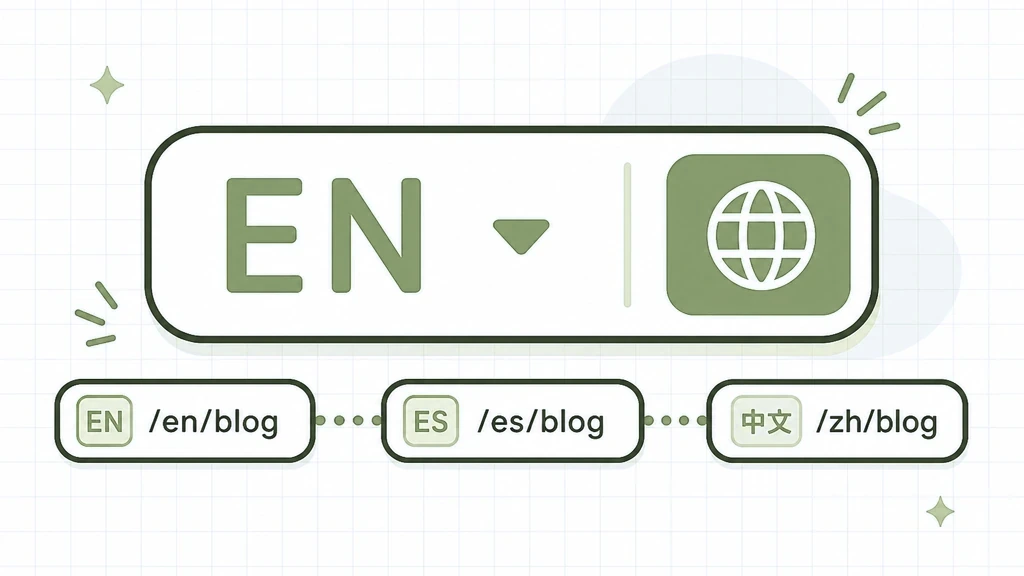
When you want to translate your website, you need more than a word-for-word swap in your CMS. You need a clear plan for which languages to launch, how deeply to localize each market, and how to publish crawlable language versions that customers—and Google and Bing—can actually use. This guide walks you through that workflow, from market choice to hreflang, without ranking promises.
Milyen kérdésekre ad választ ez az útmutató?
- What does translating your website actually require beyond swapping words?
- How should you choose languages and markets before translating?
- Do you need different URLs for each language version?
- What is the difference between website translation and localization?
- How do hreflang, canonicals and sitemaps fit a translated site?
- Should you use AI translation, human translation, or MTPE?
- What SEO mistakes break translated websites?
- How do you launch and measure a multilingual website safely?
Quick answer: translate your website into crawlable language versions
Translating your website means shipping real language versions—not hiding languages behind a cookie or on-page widget. Swapping strings in a CMS is not enough. Google recommends different crawlable URLs for each language or region version, and it judges language from visible content—not from a cookie, a widget, or an hreflang tag alone.
A durable answer looks like this:
- Choose languages and markets with demand and support capacity.
- Decide translation depth versus localization depth per market.
- Publish each language on its own URL with translated main content.
- Add reciprocal hreflang, sane canonicals, and sitemaps.
- Review quality (AI, MTPE, or human) before you scale.
If you need a website translator workflow that keeps editorial control, start with architecture and quality gates—not ranking promises.
Decide languages and markets first
Do not begin with a tool. Begin with a matrix:
- Language (French, German, Japanese)
- Market intent (same language across countries vs country-specific variants)
- Business priority (revenue, support, legal readiness)
- Content scope (homepage and product pages first, or full site)
Google distinguishes multilingual and multi-regional sites. Translating into Spanish for a global audience is different from launching es-MX and es-ES for country targeting. If you are unsure whether you need language expansion, country expansion, or both, read how international SEO differs from multilingual SEO before you commission a full website translation project.
Practical rule: launch fewer high-quality locales before many thin ones. Thin English shells with translated menus fail both users and helpful-content expectations.
Translation vs localization for websites
Website translation renders source content into another language while staying close to the original meaning.
Website localization goes further—currency, legal copy, examples, imagery, cultural references, and market UX.
You can translate a help article literally and still need localization on pricing, checkout, or regulated claims. Google does not treat “localization” as a separate ranking factor with a special name, but it does expect language versions to be predominantly in one language with people-first main content. Boilerplate-only translation (chrome translated, body still English) creates weak language versions.
Decision tip:
- Translate first for informational pages where meaning transfers cleanly.
- Localize conversion, legal, and market-sensitive templates.
- Keep a glossary so brand and product terms stay consistent across locales.
URL architecture for translated pages
To translate a website for search, give each language a stable public URL. Common patterns:
- Folders:
example.com/fr/... - Subdomains:
fr.example.com/... - ccTLDs:
example.fr/...(stronger country signal, heavier ops)
Avoid relying on a single URL that switches language via cookies or client settings. Google recommends crawlable alternate URLs and user-visible language or country selectors—not automatic redirects based on assumed location.
Whatever pattern you choose, keep it consistent across templates, sitemaps, analytics, and internal links. Engineering and content must share one matrix.
Hreflang, canonical tagek és webhelytérképek
Hreflang tells Google about language or regional alternates. It does not detect page language and does not replace translation quality. Clusters must be reciprocal. Pair each locale URL with a clear canonical that prefers the same-language preferred page when duplicates exist.
Sitemaps help discovery of language versions and can carry xhtml:link hreflang annotations when you use the sitemap method. Submit and monitor locale URLs in Search Console (and Bing Webmaster Tools for multi-engine programs).
Implementation order that works:
- Publish crawlable locale HTML with translated main content.
- Align canonicals.
- Generate reciprocal hreflang.
- Update sitemaps.
- Validate with URL Inspection / live crawls before scaling.
AI, human and MTPE workflows
An AI website translator can accelerate drafts, but translating your website is an operations problem as much as a model problem. Choose a workflow by page risk:
- Raw machine translation: only for low-risk internal drafts—not public conversion pages.
- MTPE (machine translation + post-editing): good default for many product and support pages when glossary and review gates exist.
- Human translation: legal, brand voice, high-stakes conversion, and culturally sensitive copy.
People-first helpful content expectations apply in every language. Low-quality machine-only pages can create thin locale experiences even when navigation looks translated.
Minimum quality stack:
- Glossary of brand and product terms
- Translation memory for consistency and speed
- Human review on priority templates
- Publish gates that block mixed-language pages
Content quality and SEO requirements
Search engines reward crawlable, useful language versions—not translation tool branding. Before you scale:
- Translate main content, not only menus.
- Localize titles, meta descriptions, and headings per locale URL.
- Keep each page predominantly in one language.
- Offer a visible language selector.
- Avoid forced locale redirects for crawlers and users.
- Keep organization and product entities consistent across locales.
Bing also expects crawlable, useful content and clear structure. Build once for shared foundations, then monitor both Google and Bing properties where relevant.
Indítás előtti ellenőrzőlista
Use this checklist when you are ready to translate your website into production locales:
Common mistakes when people “just translate” a site
- Cookie-only language switches that hide variants from crawlers
- Boilerplate-only translation leaving the body in English
- Broken hreflang (missing return links, invalid codes, canonical conflicts)
- One shared English metadata set across all languages
- Automatic geo redirects that trap users and bots
- Scaling to ten locales before one locale is operationally maintainable
- Promising rankings from any translation tool—unsupported and risky
Fix architecture and content quality first; tooling should enforce that process.
A hagyományos keresés és a válaszmotorok alapjai
Shared foundations for translating a website still matter across Google, Bing, and answer engines: crawlable language versions, clear entities, evidence-backed claims, structured data where truthful, and real localization—not English-only shells.
Platformútmutató: Google Kereső
For Google Search, discovery depends on crawlable locale URLs with language-appropriate HTML, accurate titles and headings, and reciprocal hreflang when alternates exist. Technical foundations include indexable content (not cookie-only switches), localized metadata, sitemaps, and canonical discipline. Content quality means people-first main content in each language; authority comes from clear organization identity and corroborating sources—not translation-tool marketing. Multilingual implication: each language URL must stand alone. Measure with Search Console coverage and URL Inspection per locale. Known vs uncertain: Google documents multilingual and hreflang behavior; it does not guarantee rankings from any CMS or AI translation workflow.
Platformútmutató: Bing
A Bing a Google-hoz hasonlóan feltérképezhető, jól strukturált, többnyelvű oldalakat fedez fel és indexel, és világos URL-eket, illetve tartalmat vár el. A technikai alapok közé tartoznak a lekérdezhető lokalizált URL-ek, a hasznos tartalom és a Bing Webmaster Tools használatával végzett monitorozás. A kizárólag a kezelőfelületet érintő fordítás helyett válasszon lokalizált címsorokat, állításokat és GYIK-eket. A hitelességet továbbra is a megbízható források és a következetes entitások erősítik. Többnyelvű webhelyeknél ne rejtse el a nyelveket csak az ügyféloldalon működő váltók mögé. Az indexelést és a feltérképezési statisztikákat a Bing Webmaster Toolsban ellenőrizze. Ami ismert, és ami nem: a Bing irányelvei hangsúlyozzák a feltérképezhető, hasznos tartalom fontosságát; a fordítóeszközökhöz ne találjon ki kizárólag a Bingre jellemző rangsorolási tényezőket.
Platformútmutató: ChatGPT
ChatGPT may cite or summarize publicly accessible pages when language versions are clear and answer-ready. Discovery is not a conventional crawl ranking; visibility looks like being selected as a source or referenced in answers. Technical foundations still start with accessible HTML URLs—not widget overlays that hide copy. Content qualities that help include direct answers, FAQs, and stable terminology from glossaries. Authority comes from evidence and consistent entities across locales. Multilingual implication: each locale page should be readable on its own. Measurement is imperfect—treat citation checks as hypotheses. Known vs uncertain: there is no documented guarantee that any website translator produces ChatGPT citations.
Platformútmutató: Gemini
A Gemini és a kapcsolódó Google AI-felületek számára előnyös az egységes entitáshasználat, a pontos strukturált adatok és az indexelhető lokalizált oldalak megléte. A láthatóságot a hivatkozások és a felismerhetőség jelentik — ne találjon ki Gemini-specifikus rangsorolási tényezőket. A technikai alapok átfedésben vannak a Google Kereső feltérképezhetőségi és metaadat-minőségi elvárásaival. A tartalom minden nyelven világos állításokat és meghatározásokat tartalmazzon. A hitelesség alapja a szervezet következetes megjelenítése és az állítások megerősítése. Többnyelvű webhelyeknél a szójegyzék alapján egységesített terméknevek csökkentik a nyelvi változatok közötti félreértéseket. A teljesítményt hagyományos módon a Search Console-lal mérje, az AI-válaszokat pedig mintavételezéssel, minőségi szempontok alapján értékelje. Ami ismert, és ami nem: a Gemini működése nem helyettesíti a Google Kereső hreflangre és nyelvi változatokra vonatkozó dokumentált útmutatását.
Platformútmutató: Google AI-áttekintések
A Google AI-áttekintések hivatkozhatnak az állításokat alátámasztó oldalakra; a bekerülés feltételei továbbra is az emberközpontú, indexelhető tartalmakra épülnek. Az AI-áttekintések nem nyelvváltók, és nem helyettesítik a hreflanget. A technikai alapok továbbra is a feltérképezhető, lokalizált HTML és a hiteles strukturált adatok. A minőségi tartalom minden nyelven tömör válaszokat és egyértelmű címsorokat tartalmaz. A hitelességi szempontok megegyeznek a hasznos tartalommal szemben támasztott elvárásokkal. Többnyelvű webhelyeknél egyetlen lefordított oldal esetében sem garantált, hogy bekerül az áttekintésbe. Ha elérhetők, mérje az eredményeket a Search Console generatív jelentéseivel, a hagyományos indexelési mutatókat pedig külön kezelje. Ami ismert, és ami nem: egyetlen fordítási munkafolyamat sem garantálja az AI-áttekintésekben való megjelenést.
Hol jön képbe a GlotEO?
If your goal is to translate your website into crawlable, reviewable language versions—not a single-URL language toggle—GlotEO’s website localization platform supports multilingual content workflows with glossary control, translation memory, and SEO-aware publishing.
Search-led teams can also evaluate GlotEO’s multilingual SEO platform when annotations and locale governance sit beside translation. Compare GlotEO pricing and plans when you are ready to operationalise the matrix.
Hivatkozások
- A cikkben hivatkozott útmutatást támasztja alá (Bing webmesteri irányelvek)
- A cikkben hivatkozott útmutatást támasztja alá (Hogyan adható meg a kanonikus URL rel=canonical használatával és más módszerekkel?)
- A cikkben hivatkozott útmutatást támasztja alá (Hasznos, megbízható, embereknek szóló tartalom készítése)
- A cikkben hivatkozott útmutatást támasztja alá (Helyi nyelvű oldalváltozatok megadása a Google számára)
- A cikkben hivatkozott útmutatást támasztja alá (Több régiót és nyelvet kiszolgáló webhelyek kezelése)
- A cikkben hivatkozott útmutatást támasztja alá (Ismerkedés a webhelytérképekkel)